 This website uses cookies.
  9th Edition Competitive Roundtable: The Try-Hard Perspective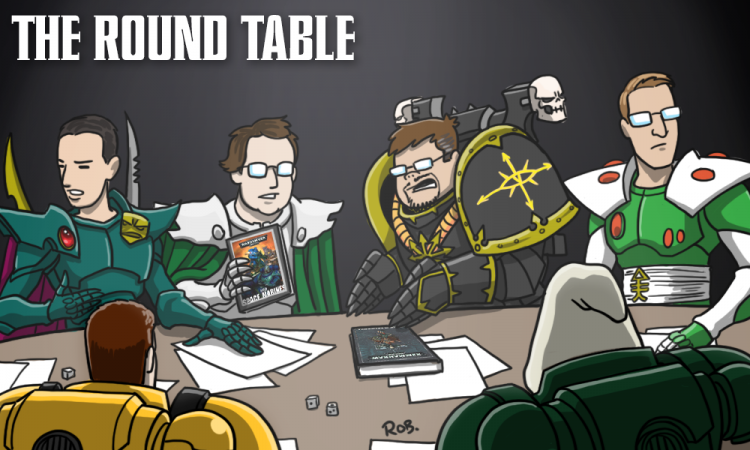
The Round Table
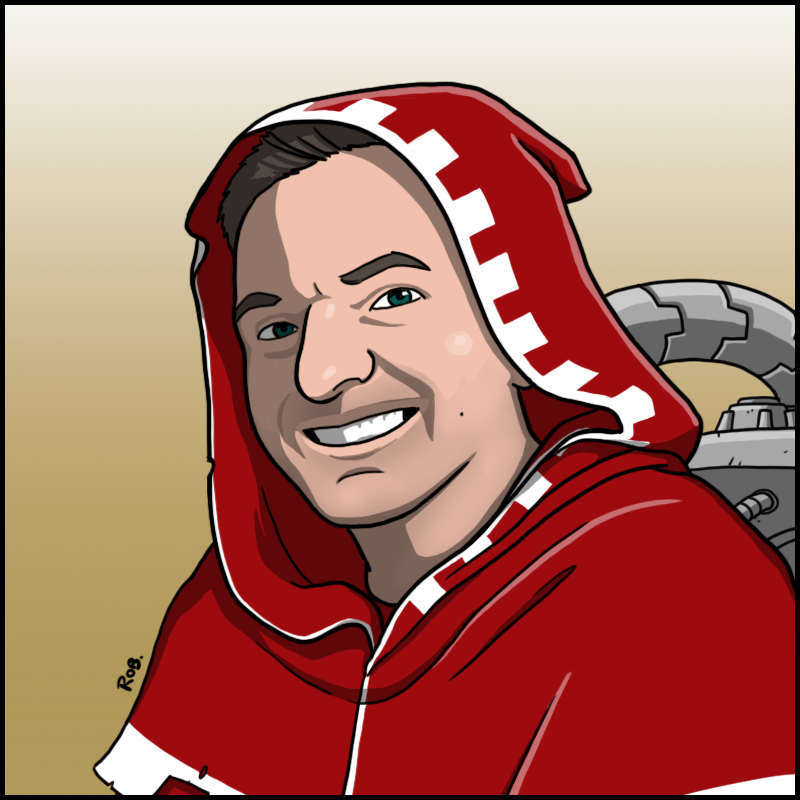
Cyle "Naramyth" Thompson is a long-time 40k tournament player and Tech-adept. He's most notable for "continually beating the pants off Jon Kilcullen and everyone on Jon's team whenever they play against each other," and started the 2020 ITC season off strong by winning the 2020 Wheat City Open GT back in February with Iron Hands. He's currently ranked 30th in the ITC 2020 scoring with 3 out of 6 qualifying events played, for whatever that's worth in this dire hellworld.
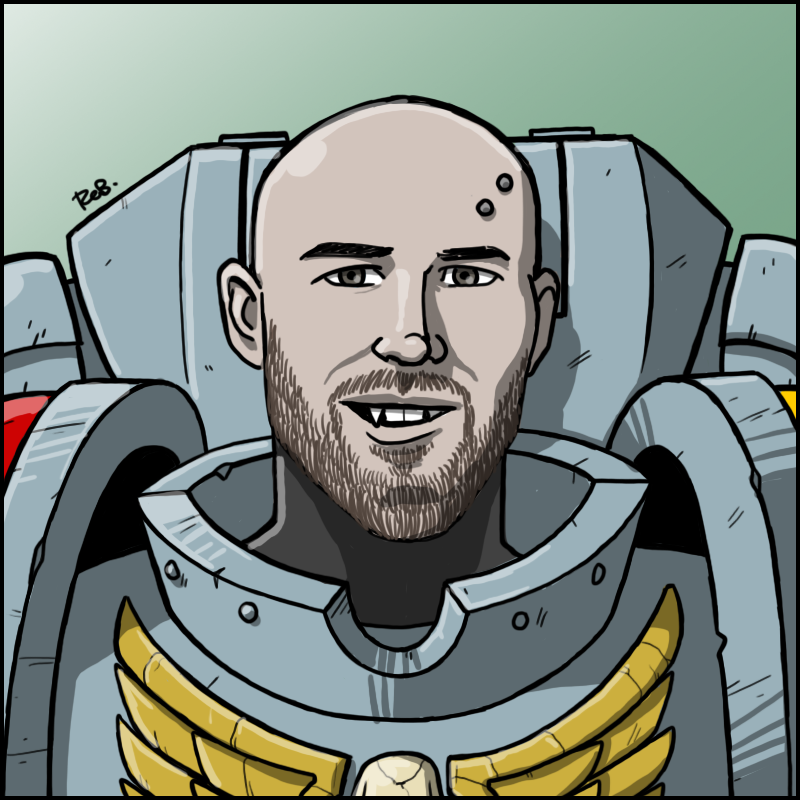
Jon Kilcullen is one of the newest additions to the Goonhammer author team, having made the transition with our articles analyzing Psychic Awakening: Saga of the Beast. Jon recently rose to internet fame and stardom as one of the game's preeminent Space Wolves players thanks to some strong finishes early in the year, particularly at the Wheat City Open GT in February. Jon currently ranks 19th in ITC scoring with 5 out of 6 qualifying events.
 Shane Watts is a member of the U.S. Army eSports team and an all-around badass. While he's known for playing Adeptus Custodes, his recent exploits have seen him giving Grey Knights and Chaos Knights a turn. Unlike the rest of these yabbos, Shane still believes in Kill Team and attends events on a regular basis. Shane is currently ranked 21st in ITC scoring with 6 out of 6 qualifying events, thanks to a 4th-place finish at the Maryland Open GT in March.
James "Boon" Kelling is well-known for three things: His Eldar bullshit, being the first person ever to notice Iron Hands were an issue (and never letting us forget about it), and his lovely display boards. He's currently ranked 17th in ITC scoring with 4 out of 6 qualifying events, thanks to second place finishes at the Fargo Two Rivers Open GT in March and 1st place finishes at the Burnsville Dreamers RTT and LVO RTT events.
Chase "Gunum" Garber, Cyle's partner in thoughtcrimes against good taste, is perhaps best known for his work on the beloved "Hear Me Out" series, wherein he continually attempts to win events with what we'll call "path less traveled" strategies and lists. Ever the iconoclast, Chase abandoned his Dark Angels the moment they became good, leaving them for Harlequins until they inevitably saw new life thanks to a pretty pushed White Dwarf Index. His current plans are unknown, but rest assured they'll be inscrutable. Chase has only played 2 events this year, but one of those resulted in an 8th-place finish at the Two Rivers Open GT in February.
 James "One_Wing" Grover is the brains behind the strategy and tactics articles on Goonhammer dot com, if this were a "brains" kind of operation. He's also renowned for running Eldar bullshit, though isn't above the occasional Necron nonsense as a palette-cleanser. James' 2020 season started slow and he's only played in two events this year but his record includes a 12th-place finish at the 2020 Beachhead Brawl Major in February.
First Impressions
First off, what are your impressions of 9th edition? Broadly speaking, what do you think of the changes from 8th?
Cyle: I'm extremely happy with my first couple passes at this rulebook. A lot of the really game-y interactions have been stripped out of the game and therefore there is a lot less gotchas floating around, mainly around close combat and terrain. I'll get into a bunch of this when we cover each phase but for now a few things that jumped out to me that don't really belong anywhere else: There is a call out that STAL- (Strength, Toughness, Attacks, Leadership, null value) cannot be modified below '1' and ‘-‘ cannot be modified in anyway. Also stats related: equipment now modifies stats directly so order of operations math now works as it should instead of changing at the end. AN early 8th FAQ has been codified with dice cannot be modified below '1', which has some serious implications with baby's first actual 1+ save in the game. "Feel No Pain"-type abilities have a blanket “can only use one of these” rules, and finally, only one “in-game” CP can be generated per player per turn and no CP can be generated off of pregame spends. All in all, a bunch of great changes that just put to rest a bunch of tiresome arguments. Jon: Cyle took the lead on discussing a lot of the notable cleanup changes to many of the problems with 8th. I really like all of these changes and I was super excited when I saw all the rules drop. Until I read the missions scoring, anyways. To me the way CP re-rolls work and what they do and do not work on has played a big role in all my games so far. It’s a small change that can have a large impact on the game. Having to re-roll both dice for a charge or psychic test really changes the math. Not being able to re-roll a vehicle explosion seems impactful and a good change.
A couple seemingly small changes to combat that all combine to be very punishing, but we will get to that in a bit.
Shane: There are a ton of exciting changes here, some for better, some for worse. I fully expect that the sum of these changes will shape the meta to be very different from 8th edition.James: As the others mentioned there are a lot of fantastic tweaks to the core 8th edition rules - much of which is simply placing definitions around specific states of being for a unit or clarifying precise interactions that go a long ways towards clearing up ambiguity across the game (don't forget about PEMDAS). However, the new editions does make some subtle and not so subtle tweaks over 8th that will drastically impact how the game is played. An obvious change is morale and coherency, but one of the low-key changes in 9th that I think will make a big difference in game is the 5" vertical engagement range. I'll expand on this further where it comes up.
Chase: Tons of good stuff coming at us for this edition that I think are really good for the game. From the shorter game rounds to the change to the morale phase, I'm really excited about what we are going to be seeing moving forward. Coherency does have some changes, but I don't think it will affect to much. I am really excited to see how the new Character screening is going to work out. CP generation and spending is still going to be a core of the game, and I'm ready to see how strategies around the game work with the new command phase.
Wings: I've already shared my high level thoughts in our overall review, but suffice to say that the quality of the core rules in this edition is extremely high. As we've gazed far, far too deeply into them in the process of putting together the daily Ruleshammer updates we've found a few issues round the edges that need tidying up, but they're generally pretty sound. I'm also a big fan of the kind of game they seem to be aiming for, which is fast, punchy and decided by who makes the the best decisions about how to use their units.
The Command Phase
The Command Phase is an all new phase of the game in 9th edition. There will likely be a number of actions that specifically occur in this phase as armies are updated throughout 9th edition, however, in the meantime we know that two major actions will occur - gain a CP, and score victory points during the game.
Cyle: It exists!Jon: Getting 1 CP per turn seems cool to me.
Shane: The inclusion of generating 1 CP at the beginning of every one of your turns adds in some extra shock factor for the later turns of the game, in that reliably you can have CP to use a critical Stratagem that you may not have properly budgeted for in 8th ed. (Counter-Offensive anyone)?Wings: While I like the addition of the Command Phase in its own right, I am a bit worried by the consequences of consolidating all abilities into it. Based on the Chaplain datasheet in Indomitus, this appears to include abilities like Litanies that used to go off at the start of the Battle Round - and that's not fantastic, because part of the reason abilities like that were moved to the start of the Battle Round is that defensive abilities that activate at the start of the turn really suck for the person who goes second, as their opponent gets to shoot them while they're "shields down". That can obviously be addressed over time with changes ability design, but I'm a little apprehensive that the start of edition FAQ/errata might hurt a few things.
The Movement Phase
Some clarifications and rule interpretation improvements in the Movement phase include specially identifying movement types (normal, advance, remain stationary, etc), reinforcements receiving their own sub-phase and specifically identified as having moved their full distance upon arriving. Similarly, embarked units count as moving with their ride, and disembarked units are specifically mentioned as having counted as moved even if they go no further. The team discusses additional, more substantive changes below:
Cyle: A few major changes stuck out to me:- Coherency for 6+ model units requiring models to be within range of 2 other models is huge. Daisy chaining 2 ranks can certainly still happen, but it really makes unit footprints much smaller. This also has huge ramifications for wrapping targets.
- Fly being the god rule it was has come down: units with fly cannot Fall Back and shoot... which makes mechanized Eldar real sad and all I can do is gloat in Imperium.
- Units cannot embark on a transport that itself is engaged in combat. I know I have used that trick a few times. Aircraft are never engaged and can have their 1” bubbles broken. Move blocking with flier bases will still certainly happen, it’s now just a little harder. Meanwhile, units that disembark from a destroyed transport cannot heroically intervene or charge on the turn their ride was destroyed. Kind of an edge case but does make a random character popping out a lot less scary.
- Airplanes can never be move blocked into crashing as if they cannot move their minimum or have to fly off the table they just go into strategic reserves.
Jon: A lot remains the same but with a ton of quality of life changes that I’m a fan of for the most part. The change to fly is a key change that will definitely affect a lot of armies. Same with psykers not being able to fall back and cast. Big hit to stuff like zoanthropes.
Biggest change is the coherency rules. This is a very big change when it comes to occupying space. Hurts the hordes and really affects the combat armies in the game. It’ll take a lot of time to get used to as it’s a pretty significant change.
Shane: The fact that any unit can be placed into reserves drastically changes gameplay. Units that didn’t see play because they would be immediately blown off the board now get an opportunity to dish out some damage beforehand.
Sidenote on Reserves in general: What units are going in reserves are determined secretly before deployment, then both players reveal what is going into reserves, then deployment begins. This will make the decision to place something in reserve or not more difficult for some armies, because of the lack of information about the board state.
Planes being able to leave the table (again) - let alone start off the table - certainly increases their viability. When you tack that on to the easier-to-shoot-at character rule changes, planes are looking really good at assassination runs. Also with the cap on +/- modfiers to hit, effectively the Hard to Hit rule gives them the best base defensive benefit they could receive (sorry Alaitoc planes.)
The changes to falling back are pretty big. Units with FLY can’t Fall Back and shoot anymore, which is a huge change - many relevant units are affected by this. Also now psykers can’t use powers anymore if they Fall Back, which is hilarious to say the least (better smite your way out of this combat, sucka). And then of course there is the new stratagem to escape a wrap, which when combined with the coherency changes, will make it much harder to keep units locked in combat (unless you have an ability that does so, NL/WS/WB/etc.).
Units disembarking have to be wholly within 3” now, which will really decrease the amount of footprint units have popping up now. Thankfully there is now a stratagem that makes it wayyyy harder for your opponent to surround your ride and kill all the occupants before they get out.
With the changes to coherency, the concept of "daisy chaining" your units across the table becomes a huge risk factor. There are a few “formations” that can optimize your unit placement to mitigate these risks, but it is much harder to just eat up board space now.
James: The slight vertical coherency change from 6" to 5" seems rather GW-centric (the difference between floor levels of the new terrain kits is 5") but to me what is important here is the engagement range that I mentioned previously. Depending on the board setup, the type of terrain, and what keywords the terrain maintains, this could create a lot of nuance in movement and placement. The biggest implication is the ability to 'zone out' cylindrical (or whatever shape the outline of a hull has) volumes of space. In 8th, models with the Fly keyword would routinely land on the upper level(s) of a building and either shoot, assault, or both into units below. However, with this change it's possible to actually screen out the top levels because enemy units cannot end their movement within the engagement zone of a model. This will be important for things like bikes who do not benefit from Breachable terrain pieces and will need to charge up and over to engage. That said, there is a double edged sword here in that a unit will be engaged by a charging unit that ends up within that 5" vertical zone as well. All in all, this makes for a lot of very interesting considerations and potential gotchas with relation to model placement.There is one other important clarification that I wanted to point out here, which is that now all points of a vehicle are considered hull and measurable - this is opposed to 8th edition where hull was specifically defined as the core silhouette, exempting turrets, sponsons, banners, etc - this change eliminates that weird edge case where you could see a vehicle's fins but could not target it because the hull itself was out of range.
Wings: Taken together, a lot of the changes around movement and coherency make it much harder to fully control the board. Hordes cannot spread out nearly much as they once did, flying units that move to take positions sacrifice their shooting if the enemy comes and tags them, and characters cannot sit safely in a deckchair in your backline closing off a tonne of space with impunity. I like that this is going to force players to prioritise which parts of the board they want to seize control of, something desperately needed given the shrinking of the table. With 8th edition's horde movement, sweeping to take the whole thing would have been far too easy.
I'm also a huge fan of putting Reserves in their own little sub-phase. Very sensible change.
The Psychic Phase
With a couple of exceptions that Psychic Phase remains largely unchanged, however, we take note of the change to selecting and activating psykers, falling back and casting, as well as how many times Smite can be cast.
Cyle: A couple real big changes:- A model must finish all of it’s powers before moving on to the next model.
- Psykers can’t cast if they have fallen back this turn.
There is currently no cap on a single model casting Smite more than once. It feels like a pretty nice change that everyone now has access to double tapping (or more) mortals but Magnus being able to eyebeam three or four times feels, uh, strong.
Jon: The change to being able to cast Smites multiple times seems odd to me but it could really be a strong change for stuff like Zoanthropes or Magnus. Pretty strong change for them. I just can’t imagine this being an intended change and would assume it’ll be fixed with a FAQ. Removing the jank of jumping back and forth to cast different powers seems like a good change to me.
Shane: It seems with the current wording for manifesting powers, an individual psyker could manifest smite multiple times. Which when you think about models like Magnus, this seems like a big deal. I don’t think it was intended, so hopefully it will be addressed.
Another change is that each psyker has to cast all their powers before moving onto the next psyker, order of operations with psy powers has always been important (especially with GK), so this will be a bit of a learning curve for players I think. I am fairly certain this was done just to get rid of the confusion of whether or not you did all 3 casts with Ahriman already or not. Simply because once they are done casting and you move on, they are done.
James: I think the activation order for psykers where you must complete all casting from one before moving on to the next greatly simplifies the decision making and ability for an opponent to track what's happened in the phase - it's a good change and makes things less confusing. Overall, I don't think there will be a significant impact here, but it does limit players/factions who rely on a series of powers a bit in how they plan and who will get which powers. The inability to fallback and cast powers is interesting but it's unclear to me how much this really changes competitive play. I'd add to Jon's comment above that the Warlock Conclave, especially in a Windrider Host (can still fallback and act normal) is deadly with the large number of super-Smites they can now dish. Obviously we'll wait to see the faction-specific changes but there are a lot of units that will be able to increase their damage output with this change. Of course, it's also possible GW day 1 FAQs the smite wording - in which case I don't believe the psychic phase really changes much in the way armies build or perform - there may be a little more care put into placing psykers, but likely that is more impacted by the character targeting rules.Wings: I can't see multi-smite surviving the first FAQ - it swings the value of too many things, notably anything that gives phase-long boosts to casts, or the various alt-smites that are available. Beyond that, the other change here really only hurt the most extremely psychic-tilted armies, Thousand Sons most notably, but it's how a lot of players thought the phase worked anyway, and getting people on the same page about how the game works seems to be one of the things they're driving at with this edition.
The Shooting Phase
The Shooting Phase has received a variety of interesting and/or subtle changes that have move and placement implications and that players will need to be cognizant of when allocating their attacks or wounds. Additionally, GW clarified when and how Mortal Wounds that are inflicted as 'additional' from normal attacks are handled when the underlying attack is otherwise saved (they still happen).
Cyle: Look Out, Sir! Really turns character targeting on its head: Having to have a unit of 3+ models or a vehicle/monster floating around 3” is going to throw some screening plans for a loop. After playing my one practice game that has made me an unimpeachable expert (please disregard the things I've learned while reading this very article), trying to screen out Cawl while taking advantage of his giant bubble is a lot harder now.
Big Guns Never Tire allowing vehicles and monsters to shoot into combat and not suffer move and shoot penalties makes my mechanized heart dance. I love small vehicles and not having to bend over backwards to make them worthwhile on the move is a godsend.
Attack allocation also subtly changed: once a model has had an attack allocated to it, it must continue to be the model attacks are allocated to until it dies. This really messes up mixed save units like Bullgryn. You can no longer have the bolters go to the 2+ armor guys and then, if they don’t get wounded, put the lascannon on the 4++ guy. The first guy needs to eat all the attacks until he dies. Also, hit and wound being capped at a net +1 /-1 helps even out some silly stacking that could happen cough eldar fliers cough. Unmodifed 1s always fail, and 6s always succeed. Notably, re-rolls still happen before modifiers.
Jon: From my point of view this is basically the be-all, end-all of 9th. The game seems to have put so many advantages into gunlines for this edition. No, I’m not bitter at all… why do you ask?
The character targeting rules changing really makes elite hero hammer style lists almost non-viable anymore. It was a good change though as a lot of 'feels bad' moments occurred when a single guardsmen blocked several heavy hitting characters that were standing out in the open - I think this was necessary. It’ll take time to really see how this one plays out in terms of affecting the meta but I suspect less characters will be in play.
Big Guns Never Tire is basically a kick in the pants to combat armies. It’s a big change that now allows you to screen completely differently with different types of vehicles. This combined with the no penalty to moving and shooting really helps lists such as the GSC ridge runner spam. Overall I like the change and hopefully, it brings up some new variety to the meta.
Really exciting time for non-fly gun-lines. Guard, Ad Mech, & GSC I imagine are very happy with everything that’s changed in this phase. Vehicles with fly typically had a high enough BS that the penalty to move almost did not matter, or they simply had a rule to ignore it, looking at you grav-tanks. Non-fly vehicles were really punished for moving and shooting but this change might bring in some really cool new-old tanks such as the Deathstrike. Time will tell, but I know that the ridge-runner is a real big winner from this change.
Plasma always wounding you or killing you on 1s is a thing that really crushes the efficiency of the strongest unit the space wolf book had to offer: combi-plasma terminators. It’s a hard blow to those style lists that rely on plasma as an unmodified roll of a 1 ALWAYS fails. It does not matter if you have +1 to hit - your terminator is just dead regardless. Far too risky to spend the points on a combi-weapon at this point.
Shane: Oh man, what a change for vehicles/monsters shooting wise. Only infantry suffer the move and shoot penalty of heavy weapons now, which is a boon for many units (especially fliers that were forced to move). In addition vehicles/monsters can shoot (non blast weapons) into the unit they are in combat with, which makes the concept of just hugging a vehicle to invalidate it’s shooting much more dubious. Granted you may prefer that vehicle shoots said unit over something else, so it still may be a short term win.
There has been a large change in character targeting, in that a character with 9 wounds or less needs to be within 3” of a unit of 3+, a vehicle, or a monster, in order to be protected. By doing so, that character needs to be visible and the closest unit, in order to be shot. Effectively this eliminates solo characters hanging out on backfield objectives being immune to being shot at all, which is a nice change for sure. However it creates weird interactions at the moment, for example, Talonmasters are vehicles, so 2 Talonmasters protect each other, as long as a third separate unit is closer to the firing unit. Another wonky interaction, AL character stands in front of a unit of 3+ and has another unit closer to the enemy out of LoS. Uses Conceal on the 3+ unit behind the character, now you can’t shoot any of it, so back to 8th ed basically.
James: Cyle alluded to the heavy move/shoot penalty being an Infantry-only penalty now; I think this is going to do a lot for units that previously sat on the edge of competitive playability but suffered from having heavy weapons. Light vehicles, monsters, bikes, etc - this is an immediate boost to Eldar where suddenly a slough of units Windrider Jetbikes, Vypers, Wraithlords, War Walkers, Hornets, Falcon-chassis vehicles, etc gain a 33% increase in their efficiency on the move. Tyranids also come out nicely here with some of their monsters. Interestingly, armies like Iron Hands and Drukhari take a slight hit here as everyone else gains a capability that they previously held natively.Obviously we have the Blast change for selected weapons. Overall its a pure upgrade for units that gained the ability though we'll see how it plays out after the points updates have been fully revealed. I do expect to see a clarification on whether a 2d6, 3d6, etc type of weapon truly receives a base 3 vs 6-10 model units or if it is meant to scale with additional dice - as it stands it doesn't make much sense that a Wyvern automatically has a minimum of 3 hits when it's rolling 4 dice against 6 models, but then jumps to 24 against 11 models.
Many grenade types gain the Blast rule which makes for some interesting considerations when you're looking to charge into Defensible terrain where a defending unit can Overwatch on a 5+ if they so choose - especially if that unit has access to a max grenade stratagem. What I do note about Blast is its inability to shoot in combat - and after much reflection and meditation (and looking at the physical layout of a 44" x 60" board) I actually think this edition is going to come at you fast - more on this next.
Wings: One of the things that Blast does that's potentially very impactful is make it much much easier to pack an anti-horde backup plan. My early Eldar lists are certainly going to go heavy on Aeldari missile launchers, as they do even more to shore up your threat profile against a wide variety of opponents than they used to. Being able to switch to Krak missiles for point-blank work is also helpful, as it discourages any characters that want to come and bump me. I'm also a big fan of all the streamlining of attack resolution - while technically it's a mild nerf to some of the lists I like to run, I won't miss having to calculate what the optimal pattern of alternating two and three damage missiles from Reapers is.
The Charge & Fight Phases
The charge and fight phases probably saw the greatest amount of reworking - which makes sense as it was previously the most nuanced and complex phase of the game. There is likely to be a lot of mixed opinion on whether the changes are a good thing or a bad thing for combat - but overall GW has focused on clarifying interactions and simplifying the mechanics.
Cyle: Oh boy, almost everything I hate about the charge phase has been fixed but to the detriment of melee-centric armies. But first some good news:- Overwatch is generally gone except as a core stratagem or for fish people, so a ton of pointless-except-when-its-game-deciding dice rolling has gone out the window.
- Aircraft are ignored for pile-in/consolidate as long as the models moving do not have fly. A major gamey thing just got fixed.
But now the bad news.,
- If a player declares multiple charge targets the unit have to make it into Engagement Range with every unit that was declared a charge target or the charge fails. This does create a real need to make sure everything is measured out before targets are declared which may slow down the game, however, it also takes away the “backup target” and “fight twice strat to kill a thing beyond the screen” tools a charging unit has.
- Heroic Interventions now also can move 3”/5” vertical! But can targeted by the charging unit. I like this as well as it stops the silly gotcha games and clears up a place in the rules that feels real bad when you don’t know about it.
- Who can fight has changed. Units in engagement range can fight but the second rank must be within ½” of the front AND the front rank they are fighting through also have to be within 1/2”. This completely solves some dumb “3 ranks with 25mm” problems and I’m completely for it.
- The non-active player picks who fights first after charges. A huge boon to the defender in combats.
- If a unit has a melee weapon they must use it. No more putting away the rock saws or thunderhammers to slap targets.
All this combined with the coherency rules means that wrapping and trapping is significantly harder to do and the melee tricks that can feel like cheating if you are not familiar with them have basically been written out of the game. Combined with some stratagems, which I will talk about in their own section, melee as the wrap and trap tool we know it as is dead.
Jon: The single biggest loser of 9th Ed. There’s not a lot to be positive about here outside of the Overwatch change but to be honest most armies had ways around this already or tanky enough units to eat it. To me this isn’t a massive change but I like it as it just speeds the game up.
Coherency really hurts. Wrapping is extremely difficult in 9th. Combat in 8th was really a second movement phase and it was hard to master. This edition really ratchets that difficulty up.The stratagem to leave combat by falling back through units is a huge blow. It will take much more work to reliably wrap now. Combat is supposed to be hard so when you master this phase, it’ll really feel rewarding.
The change to declaring charges has made a big difference in my test games. Smash captains are no longer these terrors that can ping pong through a gunline and cause huge amounts of chaos. You need to be on top of why you are declaring the specific unit you are declaring and why you are not declaring others if you want to succeed here now. The terror that a smash captain used to bring to a table is basically gone now with the change to how a successful charge is made (having to make it into engagement range of all units declared) This is a big change that will drastically affect me going forward into 9th. Heroic intervention took a real slap to the face here now having the charging unit just getting to fight you either way. This is a change that unfortunately needed to happen since they changed what you realistically can and can not declare. It would be way too powerful if it remained the same.
The final blow to combat is the fact that you can no longer choose to use your combat weapon meaning you are going to have to slam people with your hammers now. One of the signs of a good player in 8th was when they would move to tri-point a unit, the second was when they would choose to use their combat weapon instead of their thunder hammer. This is a really massive change that is going to drastically shift combat, now you are going to be over-killing your first unit and trying to double fight into a unit you did not declare to try and get that wrap off. I'm unsure of exactly how this will change the list design side but I know it has come up several times in my test games where I wanted to swing my wet noodle at someone and was corrected that I had to crush their skull with the hammer.
Combat-focused armies are playing this game on hard mode from now on, it appears. I, unfortunately, do not see a single upside here yet.
#saltpillar
Shane: Overwatch being a stratagem now will eliminate a lot of the low-chance of damage dice rolls (i.e. a character shoots a bolt pistol in Overwatch at a charging knight), in addition to making multi-charges have a higher chance of success. I think that since generally players only have a few units that are good at firing Overwatch, the overall important overwatch will still occur, which in turn still makes units/abilities to ignore Overwatch valuable. Tau will still be able to Overwatch as they did in 8th ed, so if they are Tau Sept, be prepared to give them an extra shooting phase again.
There were a couple big changes to Heroic Intervention: No longer can a model Heroically Intervene if they are already in engagement range (so no more basing up enemy models that charged you successfully.) Also with the addition of a vertical engagement range (5”,) models can now HI into an enemy unit above/below them, which is cool and could have some interesting impacts on multi level terrain gameplay.
I touched on the coherency on charges briefly when talking about falling back, but to really hammer it home, I think the coherency changes will drastically change how units are moved during a charge. Units would typically spread during a charge in order to facilitate wraps and giving shooting units hugs to prevent their firing, now that units with 6+ models need to be closer together, it will make this function harder to do.
There was a significant change in that the player whose turn it is not gets to choose the first unit to fight, with the caveat that charging units fight first. Which means the first non-charging unit will always be the player whose turn it is not, which is a rather drastic change. It makes units that choose to stay in combat vs falling back effectively at risk, since they can be struck before they can swing. In addition it makes units like the Foul Blightspawn even more nasty, since they make enemy units within 7” count as not charging, so charge near a Blightspawn and expect to get punched first. (And hope that unit isn’t setup/buffed for melee, Blades of Putrefaction anyone?)
The distance in which models are able to be selected to fight has changed as well. Models within engagement range can fight (1” horizontal and 5” vertical) and models that are within ½” of another friendly model that is within ½” of an enemy model. So now you can fight upwards/downward (which helps units that can’t scale terrain a ton), but fighting in multiple ranks is much harder.
James: Cyle hit on the heroic intervention change, but I want to really dig in on that a bit because this is a significant expansion to what a character is capable of engaging. The vertical component, as well as the vertical component of the engagement zone, means that a character can heroically intervene up to an effective 5.8" under the right circumstances. This is because to be eligible to heroically intervene, a character must be within the 3" horizontal and also the 5" vertical component of an enemy model but to engage that model, the character only needs to end up within the 5" vertical component. For a character intervening against a unit that's on another level, the true distance between the models (the hypotenuse) is 5.8" max, but the HI distance along the horizontal to engage the models is only 3".This again is a result of the engagement zone change. But here's where it gets really intense, and Jon may enjoy this despite his salt, that the range is expanded to 7.8" (again on the hypotenuse) for what can be effectively engaged since his Space Wolves have the capability for a 6" Heroic Intervention. Harlequins as well, and there's units that can take the same advantage of these shenanigans including Custodes and Wolves.
It'll be uncommon, and sure the opponent can swing at you, but you as the controlling player for that HI can make the decision to do so or not and how to place the character. And when it happens with certain characters it can be devastating for an opponent. That is all, of course, the sneaky bit - but all of these changes apply to the charge as well and especially out of deep strike. Which takes us back to the movement phase - there's going to be a lot of consideration that needs to be put into how models are placed and how they will interact with the terrain
At first, I did not think the changes to the charge and fight phases are kind to assault armies in a vacuum - there is a lot less survivability afforded and no clear advantage for the trade-off. There are some unique aspects like coherency that can create a lot of risk for both players if you're not careful, but on the whole there's a lot stacked against assault units. However, as I alluded to in the last section, after actually setting up the board and really taking it in, it has become painfully obvious just how fast this game is going to play. It will not be difficult for dedicated units or armies to reach assault and it'll be even harder to prevent a gunline from maintaining high output against a dedicated assault opponent with the fallback changes.
While I think the rules themselves do not favor assaults, the size of the board and the terrain changes really give them a new lease on life and I'm frankly excited to be incredibly frustrated about turn one assaults that shut down key units across my army. I honestly do not know how much this is going to shift armies - but some units are fully capable of facilitating a rush army (looking at you Impulsor) or bringing a lot of very tough combat units to the game - where previously mobility may have been a factor, that's been cut by say.... 23.61%
Wings: I don't disagree that the changes here hurt melee armies a lot, and it's clear that the designers' vision for what melee was supposed to do did not extend as far as the capability it had to completely dominate the game in 8th. The melee units that are going to be worthwhile now are the ones that are good at getting into the enemy fast, taking out whatever they've slammed into, and then be reasonably difficult to shift, with the ability to wrap now being a bonus rather than a key feature.
I will say that the weakening of melee in general is contrasted by the advantages it gains from the smaller table size and the missions. Small boards obviously make it easier to get in the opponent's face, and the fact that all missions score at the start of turn means that the ability to remove an opponent's unit from an objective and take control of it straight away is extremely valuable. Powerful melee units are one of the best things at pulling them off, and thus gives melee a certain intrinsic value within the mission set.
The Morale Phase
We have seen in the early previews how first morale changed (and it was a bit underwhelming as covered by the HoM article) and then how coherency changes made morale interesting again as the threat of a large unit dwindling to five models, or disappearing entirely, became possible. While Cyle and Jon are milquetoast on the changes Gunum is excited at the possibilities. This was also covered in yesterday's Ruleshammer.
Cyle: We have all seen the preview. Smaller units are now more vulnerable, but big units are a little safer. Depending on how modifiers work with Combat Attrition this could become really deadly. Coherency checks - Death to the conga line.Jon: Without seeing how or if there will be combat modifiers in the game. Morale seems like a swing and a miss. Mostly just kind of something that isn’t too impactful right now. If modifiers come in that will change this a lot and make morale really matter. Morale needed the change for sure.
Chase: Finally we can do something with this phase! Sure, insane bravery still exists, but forcing leadership checks across the board on as many units as possible will make things pretty interesting. There are some really cool things that we can do here with morale I want to point out: In both of my primary armies, leadership manipulation can be really easy to implement, with the Dark Angels having the Interrogator Chaplains and Harlees having well, a ton of stuff!
Death Jesters or even the Silent Shrouds' -1 leadership bubbles, for example. Suddenly, leadership debuffs are incredibly useful against all multi-model targets. Having to just get one model to run away to threaten the entire unit is a huge deal. Using Death Jesters in a Starweaver to constantly harass any unit you look at, is going to be a staple for a lot of my lists.
With the Dark Angels, our Interrogators can push forward with the incredibly tanky Death Wing Knights. Ideally getting into a position where the Knights can drop a unit to below half then, with the Chaplin, really make that Leadership fail, causing the remains of that unit to run away on 1s and 2s.
When it comes to Morale and the constant checks we can force on people, I see lots of armies being able to take advantage, really pushing to get units to that half strength. I know I have a couple of HMO ideas I’ll be running -into- Cyle that will be focusing around this. (Grizzly Trophies on Raiders anyone? Mwhahahaha)
Shane: Having coherency checks at the end of a turn is really going to change how units are placed, gone are the days of 3 models from a 30 man plaguebearer unit on 3 separate objectives that are more than 12” apart. I am really looking forward to how this will impact board coverage and overall objective holding/pressure.
Wings: I like all the changes here. Morale was extremely binary in 8th and I like the "flatter" impact profile of failing a test on different sizes of unit. Separating the morale check and attrition also opens up a bunch of design space for more interesting abilities here - maybe the days of rating every ability designed to interact with morale an F are over!
The more impactful change is definitely coherency checks though - these are necessary to prevent the new coherency rules being easily circumvented by a "dogbone" formation, and force people to be more cautious about how they place their units.
Core Stratagems
A series of new core stratagems offer additional flexibility to all factions including one to prevent traps. However, the biggest change is probably the simplest - the command re-roll limitations.
James: The command re-roll change is such an interesting and impactful change, but I think its going to create a LOT of feels bads in the early going while people adjust their expectations. It'll take a few catastrophic failures to realize just how often they relied on re-rolling a single dice that wasn't specifically tied to a hit, wound, damage, save, advance, charge or psychic/deny roll. While it certainly covers the majority of instances - things like rolling a 1 to get your favorite character/Knight to stand back up, that failure on a Vect/Plan, or countless other niche but collectively common rolls are going to be much less reliable. The inability to re-roll a single dice on a charge roll or psychic/deny test is also going to be an eye-opening change as people expectations for what constitutes a reliable charge starts to shift - this is doubly the case with the changes to the charge phase. It'll probably save me a CP on vehicle explosion re-rolls because that shit never worked for me anyway - my vehicles exploded ~3% of the time, all the time.I think the Desperate Breakout stratagem is interesting for a couple of reasons. The immediate reaction is that it has killed the tri-point and with it, elite (expensive, but not necessarily durable) assault units. I think that's largely the case, but it's also a 2 CP stratagem and I think with the overall CP economy changing, tri-pointing may be extremely useful to force a tough decision from your opponent. Either way, your going in assumption should be that the unit you tri-point with is going to be shot up, and that should change the way you build towards assault.
I couldn't care for Cut Them Down. It might be interesting in a desperate situation to force some wounds on a vehicle, monster, or character - but... even in the best of cases the number of mortal wounds is not an exciting prospect and you can almost always find a better use for the CP. I'm honestly not sure what to make of the Fire Overwatch stratagem - Tau of course do not care for the most part as they retain For The Greater Good almost unchanged - which just makes them as dangerous as they've ever been on the charge, but for others - overwatch was never really an intimidating factor - the obvious exceptions are those units that had auto-hitting weapons with real teeth - Hemlocks, Plagueburst Crawlers, etc but those were things you only charged when you had too, with select units, or 'tagged' via pile-in/consolidate. That won't change - at 1 CP these can still be expected to fire Overwatch at a threat. However, defensible terrain adds an interesting wrinkle to the equation, many units capable of putting out a high volume of fire, throw a whole bunch of grenades, or just have a moderate amount of higher powered output can be exceptionally dangerous on the 5+ to hit - especially with the number of re-rolls that have proliferated late in 8th edition.
Jon: Pour one out for the tri-point. There’s a couple impactful things that come with these stratagems. Firstly the ability to just walk out of a tri-point with Desperate Breakout or just kill your self to free it up. This is a massive blow to combat and it was really the bread and butter of your play. GSC and Dark Eldar can still just use Vect and carry on but for the rest of us this is worrying. Another shift towards the gunline in my books. They try to offset this with moving Overwatch to a universal strat but really it doesn’t even come close. This however is a good idea as it just cleans up so much of the wasted time on the table top. Great move on that, and opens Tau to actually feel unique again.
Changing Insane Bravery to once per game is another change that could come back later and end being a significant change. It’s too early to say how much this will matter, but I personally like the change - morale needs to matter more and this is a step in the right direction. The change to Insane Bravery is almost certainly going to affect Astra Militarum the most as they are the most notorious for using it to keep 1-2 brave souls alive to score critical hold points. Unfortunately the change to morale right now means you most likely will not even have to bother spending CP. Hopefully morale will matter more as the edition rolls out, as it stands its basically an afterthought.
The CP re-roll change is seemingly not a big deal but it ends up being a massive deal. Some of the biggest rolls in the game are not tied to the new re-rolls. it’s a scary prospect to try and run 3-6 impulsors now when you know, if one of these explode I just lose the game. Changing the charge to both dice and not just 1 is a change I like, same goes for psychic tests. This is really going to impact games. It’s hard to know how much but I know it’s already impacted mine.
Shane - Prepared Positions is mysteriously missing from what we have seen, although honestly very rarely did I ever use it, let alone think it actually had an impact. I think GW's idea is that with the Obscuring rule on terrain, that top of turn 1 alpha strikes will be blunted enough.Command Rerolls having an specific list of rolls can be used on is hilarious. No more re-rolling explode results, or those super important stratagems that require a roll (Agents of Vect, Taranis Knights standing back up, Sisters/BT auto deny a psychic power, etc.) Additionally now a Command Re-roll is for the "roll" and not a dice anymore, which makes charges/psy powers more dubious to succeed with as a 2D6 roll. No more just rerolling the 1 bad dice and having a good shot at success, however there are some cases where a pure re-roll is better, but I believe that mostly this is a slight nerf. Insane Bravery is now only once per game, which is certainly a nice change, but I think with the changes to how large units are going to work (coherency, morale casualties) that this will mostly go unnoticed. Armies that ran large units already had mechanics to mostly ignore morale (Orks, Tyranids) or will just limit themselves to one big unit (Daemons).
Cyle: Two more changes to stop dumb wrapping shenanigans - Desperate Breakout to get out being trapped in combat and Emergency Disembark to get out 6” of a vehicle that is destroyed
Even if a model does get trapped with all the restrictions above a unit can just fall back, however models do die on 1's, and that cannot be re-rolled... I can’t wait for the stories of losing a vehicle or monster to this. Emergency Disembark also kicks wrapping in the pants. It’ll be harder to do with being unable to string out without casualties at the end of the phase but this makes that a dangerous gambit to try to kill a few passengers or force a single CP to be used. I think this will make fragile combat units that relied on wraps worse (RIP GSC) and most combat units will wind up being trade pieces instead of build-arounds while things like Impulsors and Wave serpents will continue to be lock up pieces to o force shooting at them instead of at useful targets.
Chase: brooding silenceWings: Like Shane I'm surprised (and a bit disappointed) to see Prepared Positions gone. Given that even a fairly generous reading of the missions suggests at least some of them are tilted towards the first player, keeping this would have seemed like a sensible choice.
Other than that I like everything here - paradoxically, while my Warlocks will theoretically get immolated in tank explosions more after the CP re-roll changes, it'll annoy me a lot less because it's a lot more probable.
Strategic Reserves
9th Edition allows any unit to be held in reserve, with doing so costing you an amount of CP corresponding to the total power rating of units you hold back. These can deploy on the second and third turns of the game.
Cyle: I like the ability to reserve anything in your army at will and have them functionally outflank. However with the requirement of reserves happening before deployment AND not knowing who is going first I feel the real utility of this will be limited. I mean, you don't want to be forced to go first with your Shadowsword off the table or whatever. I really like the planes leaving the board and the the inability to force them to crash because of move blocking their minimum move: they just fly UP and come back via deep strike the next turn. The loss of transport deployment tricks is minor: it is actively bad to have less units to deploy in alternating deployment so you just have to follow your generic deployment script with what is supposed to start in rides.Shane: With reserves coming in at the end of movement on turn 2/3 and primary objectives being scored at the top of the turn, essentially that means they won't score (although they may prevent your opponent from scoring) until turn 3 at best. With a focus on primary objective scoring, this could be a huge issue for some armies. The fact that fliers can not only start in reserve, but fly off the board to come back, is a drastic increase to their survive-ability. Being able to reserve a transport isn't a new feature, but effectively this expands the list of transports that can do it.James: The flexibility to place units into reserve is always a welcome option - something like this can really help to balance against a bad match up at the table. However, I will note that a) it's relatively expensive depending on what you want to reserve, b) you need to declare all strategic reserves before deployment, c) in light of these missions, there is a very limited reasons to use this.The PL breakdown likely means you're paying somewhere between 1-2 CP per unit depending on how many and what kind you want to reserve - none of which is refundable. Cyle talked about having to declare before placing anything, I'll only add that many armies, especially Aeldari armies, have wide access to stratagems that provide a far more flexible way of reserving units which has fewer placement restrictions. For armies that have these options it's often a far better way to reserve. So then let's focus on part three of this - the mission interactions.
As the missions are designed, and we'll get to these in a minute, the primaries are entirely objective focused AND scored at the top of the turn. What this means for your strategic reserves is that if they come onto the board on T2, they do so after scoring and cannot score. On T3 it is possible to score ONLY if you were able to make an assault and find yourself on an objective, otherwise you will need to move onto an objective on T3 - if you do not do so, then you will be unable to score on T4. That means that without the help of your opponent, the very earliest you could score on the primary with a strategically reserved unit is T4 - and maybe not even then if you came in from of a transport. Honestly, the biggest losers for this are probably transports - if you find your opponent has reserved a transport like this, rejoice. Since the game is now only 5 turns long that means that you get at most 1 or 2 chances to score, and that's if you came out on T2 - not ideal. Moreover, since your opponent will know what you're reserving at the start of their deployment, they can plan accordingly for how to mitigate the flanking or maximize their scoring - especially if they go first.
For that reason, it's much more likely that strategic reserves will only be used by a select set of elite, hard-hitting, shooty units. Something you are planning to bring in to murder something outside of your obscured sight lines, or as a defensive measure to protect valuable units. All-in-all, with the difficulty of secondary scoring, and the importance of primary scoring, I think strategic reserves is actually going to be very sparingly used and probably for things that happen to have something like a 24" anti-vehicle weapon. Some kind of special unit - the kind of thing you'd name... eradicator or something.
Chase: brooding silenceWings: I expect that once we figure out how to make the best use of reserves it'll start having a big impact on games, but it's quite difficult to assess up front because it both unlocks a tonne of capabilities, and has a very different pricing profile than stuff we're used to. My gut feel is that it'll be most impactful at either the very low end (look for combinations of units that can fit into the 19PL 2CP version) or the very high end because we're extremely unused to seeing abilities that can put, for example, a Knight Valiant into deep strike. Traitor's Pyre go fwoosh. I look forward to experimenting.
Actions
Along with a new phase there is a new mechanic that units can utilize to score objectives. These are commonly tied to a primary or secondary objective and come with a set of conditions in order to score.
James: I like what this implies for the design space of the game. The most straightforward comparison to equivalent mechanics in 8th edition games are to the ITC 'Engineers' or similar secondaries but this is a more active vs passive approach. By standardizing the 'action' it does the same for scoring that you have with the 'Remain Stationary' movement distinction - the rules are placing a specific state of being on a unit that implies trade-offs. Not sure it really changes anything in the game from a competitive standpoint... it just kind of is. But it's a good change and I like what this allows for in terms of general and faction specific mission design.Cyle: It's now a codified engineers with different coats of paints. It's good.Chase: Nods, solemnlyShane: I really like this mechanic, essentially gives those units that sit on objectives another way to contribute to the game. Since these currently are mostly accomplished with infantry, I think we might see a shift in lists to include fast moving infantry, since units cannot advance and perform an action in the first turn. Also infantry units that are able to disembark after a transport moves are at a significant advantage to perform actions. The inclusion of Psychic Actions (which stops that psyker from casting any powers that turn) is also fairly interesting. Generally I find that most armies with psykers are taking them for specific powers, so they may not see consistent usage. However I am sure there will be many opportunities for these to be taken advantage of, in addition to the fact that this may affect future list building (with secondary objectives in mind.Wings: Actions is a good mechanic in principle, opening up a bunch of design space both for mission use and (maybe?) rules in Codexes. The implementation could probably have used another look though - it's clear what they're going for with the wording but (especially on Psychic Actions) it hasn't quite landed, and the hodgepodge of different start/finish times for Actions in the missions is going to be a pain to remember. Still, this is nitpicking - it's a good move overall and I'm interested to see what else they do with it. It also encourages good strategic play - forcing players to balance trade-offs between doing an action and doing other things with their units will reward smart choices.
Terrain
Much has been made about the impact of terrain and it being the third player in 9th edition. Broadly speaking, terrain in 9th edition comes in four flavors - obstacles, area terrain, hills, and buildings - for the most part, obstacles and area terrain are the only interesting aspects of terrain in 9th as hills are considered part of the table itself with no additional benefits beyond potentially blocking line of sight, and buildings are units unto themselves with the normal rules therein (fortifications).
James: Introduced in 9th is the concept of keywords for terrain that can impact how a piece of terrain might play from game to game. As laid out in the core rules, players agree to which elements have which keywords but there are also nine sets of recommendations around what is commonly GW terrain items. This adds a new wrinkle of complexity, and like every layer of complexity, there is inherent advantage to those who understand the implications of terrain, their army, and their opponents army - unfortunately that also means some of the less than ethical players in our community can take advantage of other players in the early going. In practice, for competitive play I suspect that TOs will eventually dictate the keywords for standard terrain elements, based on what they have available, to standardize the tournament experience.This is sort of a new ground as TOs have generally not had to universally define terrain types (with the exception of LVO) because it just didn't have as big of an impact. Some of the large Major events like (NoVa) did anyway and it really helped to speed the process as everyone had the same expectation as they walked up to the table.In 8th competitive play, the ITC standard was very commonly applied with level one ruins blocking line of sight. This is effectively gone in 9th edition core play, replaced by the Obscured keyword which has a greater fooprint for line of sight blocking but also trades off maneuverability as the keyword requires you to be behind a terrain element rather than in it - which limits where you can place. Also for those on the West Coast of the US, the new rules finally kills the idea of enclosed ruins as being within makes your targetable so long as the normal line of sight rules are met. It's also worth noting that Obscuring terrain elements can be circumvented in rounds two or three by strategic reserves or if the major terrain element is in the middle of the board, any models that reach the area terrain footprint will ignore the Obscuring protection it offers the opponent.
All in all, with the changes to line of sight blocking, I think turn one shooting is probably greatly decreased while the following turns will likely be much more deadly as it becomes harder or impossible to hide certain units. Durability seems to be the name of this edition.
Shane: With the board shrinking, in theory the terrain will become a little more compacted (assuming you play with the same amount.) Which also should impact the amount of objectives out in the open as well, since in theory there is just less open space in general.The fact that the traits of terrain are effectively able to be customized to a terrain piece is a pretty cool feature, and could positively impact events that want to tailor the terrain to what they think works best. Additionally all of the traditional terrain pieces (Ruins, craters/forests, hills) have mostly clearly defined traits which should aid Tournament Organizers. Really the newest trait is Obscuring, which has been talked about plenty at this point, but truly this is effectively another way to make LoS blocking terrain. Depending on the size of the feature, and whether or not the base of said terrain piece counts as well, this new rule could be problematic. If most of your terrain features have holes/windows in them, as soon as a model touches sad terrain piece, it can see through these windows etc (which is only truly different if you played the ITC first floor blocking LoS rule.) Now in my local area, NOVA style Ls are fairly common, so I am unsure how this change will impact it those table types.
Cyle: I do like the new terrain rules. Keywords with a legend for each piece of terrain at an event will make this an easy transition. If there isn't a legend though, expect those people to bully less experienced players into better keywords. I disagree with James, this does not kill the magic box. A windowless square could easily be called Breachable, Obscuring and boom, we have a magic boxes as true LoS is still a thing. What's going to catch out players is ruins that have windows and trying to hide inside of them. In symmetrical boards I can easily see a world where first floor still blocks LoS just due to some dumb crack in a wall on one side but not the other. A real great boon in the rules is vehicles don't get cover from terrain. That also means no more 1+ SV FW dreads and disco lords and 2+ Cladius tanks sitting on a bit of terrain but are 50% obscured and claiming cover bonuses because some model is just touching a sheer L wall but is otherwise obscured by models. Good riddance.One real bad problem is Breachable walls being basically un-chargable if the defender lines the inside of the wall correctly so models can't be placed - this is because the Wobbly Model rule is so clear about where things can and cannot be placed. I'd recommend Breachable terrain (ruins) to also be Defense Line terrain so units can be charged if they are within 2" of the wall.
Chase: seemingly pensiveWings: Similar to actions, there's a lot of promise here but even more so than with those some tidying is needed, here to the extent that we'll need to see which way the FAQ falls on Obscuring and Dense terrain before we can properly assess their impact. I do think the change to Difficult Ground to now reduce non-charge movement by 2" as well will have a reasonably big impact on competitive play - craters and woods are common, and especially with trying to stay in coherency a 2" movement reduction is significant.
Otherwise, it's a good system - you can replicate the terrain rules we're used to within it, and it seems to provide some new angles as well.
Army Construction
Perhaps the biggest change to the game (outside of the board size) is the army construction rules and the resultant Command Point allocations. The new rules in 9th edition provide each battleforged army with 12 CP at the outset (Strike Force/tournament sized game), your Warlord's detachment is refunded and then for each additional detachment you pay a CP-cost. The exception is the new Supreme Command detachment (a single Supreme Commander slot) which is free and can refund 2-4 CP depending on whether you've included a Brigade, Battalion, or Patrol detachment. Beyond Primarchs and Daemon Primarchs, it's not yet clear who will be designated as a Supreme Commander within each faction.
James: Without having the points in hand it's hard to say what the CP changes are going to mean for competitive play. However, out of the gate I think certain armies are going to struggle. I look specifically at Knights, Orks, and Genestealer Cults as being particularly hungry for CP in the current edition. Supreme Commanders might alleviate the CP burden a bit but that's likely going to come at a significant trade off in points and also requiring the army to be built around that model.In 8th a three-detachment mixed army was pretty much the standard, but between the anticipated point increases and the CP cost, I think two detachments is much more likely to become the standard in 9th. At least out of the gate. However, it's worth noting that some combination of Battallion, Vanguard, Outrider, Spearhead detachments will cost 6 CP after factoring for the Warlord's detachment and you're guaranteed to gain at least another 5 CP throughout the game for a total of 11 CP. Many 8th edition armies were successful with fewer points than that. This makes it hard to predict how the meta is going to shift - I think initially people may seek to double up on the goodies which is going to cut back on the number of troops and objective secured in the game as players opt for two Patrols or a single Battallion + [Vanguard/Spearhead/Outrider] detachment.
All that said, having watched Ork and GSC players spend 10 CPs prior to turn 2, I think there's going to be some real construction and CP economy struggles for them until codex updates roll out. At least for Orks I have to imagine Ghaz is on the Supreme Commander list - so that'll help a bit.
Jon: Here we are again, looking at CP and army construction and thinking, "wow." This is a hit to combat armies. I will never stop pouring salt on this dead horse Typically combat armies are some of the most CP-hungry out there (looking at you, Blood Angels/GSC) so this is a bit worrying tho it is somewhat offset by the Command Phase giving 1 CP per turn. 8th saw a lot of hero hammer and double battalion lists; as we transition to 9th I think you will see far less of both and a lot more of battalion+patrol. This combo appears to be very versatile and gives you many different options for a minimal CP cost. The HQ slots are pretty limited so you won’t see as much character-centric lists that rely on screens while characters do the heavy lifting. The change to how character targeting works and coherency make it much harder to protect your key units. At this point it seems as though less is more going into 9th. The game is going to be opened up to focus on the ultra durable units your codex has to offer. As it stands it’s the only thing that really can withstand going second and hanging around on objectives. Death guard seem particularly well suited for 9th. If the GT missions don't change the current dynamic I would most likely have to shift to 2 big units of Wulfen to try and endure what I think is going to be the gunline meta. Shane: With the changes to how CP are generated, the days of 2-3 Battalions are gone. I think there will be a lot more Patrol detachments in the future, simply from the low tax entry cost.The inclusion of a defined battle roster is also significant: Generally most TOs had to determine what needed to be included in the roster: Warlord, Warlord Trait, Free Relic, ETC. Now with this defined, a lot of the being able to shift via match ups is gone. In this new Battle Roster, it mentions having your: warlord, warlord trait, 'free' relic, psychic powers, litanies, extra WL traits, extra relic(s), and any pre-game unit upgrades, all included on your roster. This will speed up games in that you aren’t going to have to determine what you are going to take, but at the same token, all those things you only took vs certain armies will probably never see the light of day again.
I think this could greatly impact impact Chaos Knights, if mostly because a lot of their relics are situational. Chaos in general took a hit, having to have every psychic power listed limits the amount of flex in this (not to mention Dark Apostle Prayers.) Most armies had a few flex picks for these and so should feel the impact- Custodes for example have a WL trait and a relic just to deny Psychic powers that were mostly a flex pick in the past. Probably least impacted are the Space Marines, simply because generally their lists were built with these already in mind.
Cyle: The Detachment system feels weird now. There is no reason to play a brigade unless you want to avoid paying 2-3CP for more slots of a specific type, but the CP changes make me real happy. In my practice games I've wound up with 4-8 CP left at the end of 5 rounds even with an aggressive (for me) spend of 4 CP at the beginning of the game. The change of not picking warlord traits/relics/spells at the table is a huge nerf for niche options and makes "utility" characters like librarians and chaplains a lot worse because there is a lot less incentive to include them if you do not have a specific game plan. It will probably be better to just bring the Chapter Master/LT combo or having a specific Litney/Power that is part of the gameplan instead of paying the premium for a character that would have game to game "sideboarding" potential. Since we all wind up with the same amount of CP I foresee a lot less HQs and mandatory troops floating around which will probably exasperate the go first shoot first problem unless something like activities become a troop only thing.Chase: brooding silenceWings: I mean I'm biased because honestly both my main armies (Necrons and Craftworlds) didn't love the old army building system, with my spooky bois in particular being massively better off CP-wise in 9th than I could ever manage to make them previously. The new system is also much more intuitive than the old - people are much more comfortable with the idea of paying for something that lets you do stuff than being paid for contorting your army to tick certain boxes. Finally, it adds much more severe costs to doing weirdo mix-and-match armies such as some factions like to do, another thing that's never really sat quite right with some players. I do hate that it harshly punishes a few units (mostly any LoWs who aren't Supreme Command eligible or full-blown Knights but I'm assuming later content will be addressing that.
Deployment
Cyle: Transports are set up with the units declared inside of them and along with deep strikes must be declared in their entirety before any other deployment. Losing out on that flexibility really changes how some armies work. This combined with the return of the One True Deployment Style of alternating deployment pushes some deployment decisions all the way back to army building which feels bad honestly, one of my favorite things about the game post marines is the amount of decisions that the player got to make at the table and taking some of that away feels bad. Chase: Alternating deployment with no seize is the best. The. Best. Being able to actively counter deploy people's scouts is a great thing. Not only that, but it adds just that little bit extra challenge of the Deployment phase.
Jon: Well, it’s far more clunky than at the end of 8th Ed. I am personally not at all a fan of any of these changes. I really do not want to go back to deploying back and forth. I was a big fan of full drop attack/defend style deploying. more time to go get a drink and relax The roll for attacker/defender doesn’t seem to mean much at the moment as the big roll is next. Rolling for going first or second, as it stands with the missions we currently know, no one in their right mind would ever choose to go second as it's just way too punishing. Shane - There are two major changes to deployment: reserves are decided before deployment begins, and we are back to alternating deploying units (to which I gave a pained sigh). With an emphasis to go first, and not knowing at all before deploying, I think we will see a shift back to a generally more reserved, defensive deployment style.The Missions
Provided with the 9th edition core rules are a series of Eternal War missions meant for competitive, matched play. This represents an exciting new direction from Games Workshop in engaging the competitive community and providing a measure of standardization in the tournament experience globally. We DO understand that there is a GT-specific packet due out, but our competitive players have thoughts on the Eternal War pack in the meantime...
Cyle: The missions are garbage. Scoring at top of turn? What is this, 2015? Play a real mission packet until this is sorted (but use alternating deployment, having all of your pregame decisions sorted before coming to the table, and 5 battle rounds because those seem like consistent through lines for this edition).Jon: THESE PRIMARIES ARE SO F***ING STUPID.Shane: These missions were a good idea that somehow just didn't pan out.
James: These are not missions that should be used in competitive play and I'd recommend just waiting for the rumored 'GT Mission Packet'. That or use the 2020 ITC missions - if I'm being honest, those missions were the best missions I've played in some 20+ years of 40k and unfortunately received a too limited run due to the Earth trying to kill us all. Which is a shame.Chase: seems pained to be agreeing with CyleWings: I think I have a kinder view of the missions than most; I do believe some sort of change to provide a bit of help to player 2 is needed, but that a relatively light-touch tweak would be sufficient for an initial attempt, and the degree of tuning needed is within scope for what the GT pack could provide. These definitely feel very different than we're used to because they're the first competitive missions we've ever seen that have been designed alongside the game itself. Their systems are thus tightly integrated with the updated way the game plays overall, rather than being a layer on top that you can attack from oblique angles, and I'm expecting to change how I play quite drastically, hopefully in a good way. On the flip side, numbers don't tend to lie, and rumoured go-first win rates from people who've managed to get on the table with 1750 lists and the core rules sound a bit alarming. Even though I expect them to get at least a bit better once people practice more, I'm willing to have my optimism shattered. My full thoughts on the missions are here, and I'll now step back and let everyone else get on with it.
Yeah, Okay - But What About the Missions?
Almost universally hate it, got it, talk about it anyway.
Jon: Alright so it looks as if the time of simple ITC secondaries are gone and now, in the beginning, it’s going to feel like a tidal wave of information for everyone. This isn’t bad or good. It’s just different. These secondaries are a far cry from the incredibly-easy-to-achieve secondaries of the ITC missions. These are hard to max out, with some of them simply not being possible to max out. This is going to take some time and experience to be able to plan and tailor lists around.Right off the bat, Purge the Enemy secondaries look like a go-to for reliable points as almost every list will give up some combination of these which will allow you to customize it to who you are playing. The level of customization for specific opponents seems pretty high but as you go to select your third the choices get really really difficult. People will be more likely to take 1-3 vehicles or 1-6 under 11 wound models to make taking Bring it Down enticing but ultimately a trap. The same can be said for Assassinate as it only gives 3 VP per character killed. This is one that hits home for me as I lived or died on the Impulsor rush, which was essentially just garbage getting in the way until my characters could arrive. Hero hammer behind a wall of floating OP transports. This is another nail in that coffin for me. You will want to move to maybe 4 max characters so again you are not rewarding max and making an easy choice for your opponent. The others aren’t as impactful to me so let’s move on.
No Mercy, No Respite is an interesting kill oriented secondary grouping. We have Thin Their Ranks which is a decent pick into the hordes as every 10 models killed earning 1 point (I wish it was wounds not models). It’s a tough pick as you really need to be facing a massive horde for this to max out. Wouldn’t pick this into a horde personally. Attrition is just so much better into a horde or semi fragile MSU army. This secondary gives you 4 points if you killed more at the end of a battle round. This will be taken a lot. While We Stand, We Fight seems like a cool idea but a risky one. Having to pick the 3 highest points models in your army and getting them to live until the end of the game is tough. High risk high reward as its 5 VP per. Unsure how this will change things. There’s a lot that can go wrong with strategic reserves here.
Battlefield Supremacy is your board control secondary grouping. Now this is the one I have routinely gone to in my test games. Linebreaker is solid for any combat army that can cross the table quickly and force people to castle. Engage on all Fronts is one that has been chosen against me many times but to me it seems super risky to pick as it forces you to really spread out so if your army doesn’t like to do that it's going to be detrimental. This isn’t a secondary most can reliably choose but armies like GSC for sure can take advantage of it. Domination is not one I have dared to try yet as that go first roll is after choosing secondaries so it’s just too risky but for some armies like Death Guard this seems like it would be great. The ultra durable, board presence style of army.
The entire Shadow Operations secondary list is a lot like engineer squads of ITC/Nova. It’s really hard to score Investigate as your enemy can stop it just by shoving stuff into the middle of the board. Repair Teleport Homer is a good choice vs super aggressive armies that don’t have much that can stay behind and lock down home deployment zones. It forces decisions on to your opponent, do you keep important units back to stop this? Do you turn your army around and go after them? Do you just ignore it? Tough choices here. I like the secondary for that reason as it’s been very good into my lists.
Warpcraft secondaries are the ones that definitely changed what I would consider bringing to an event. Running triple ruin priests is not a thing you can do now considering it will just reward your opponent with 15 points when they kill all 3. This seems admittedly a little too easy to score max on to me. The other secondaries to me seem too risky to discuss really as you don’t just need to be alive to do them. You need to be in range of someone at a specific time and then need to actually pass a psychic test (admittedly an easy test) to score a couple points. It just feels like too many hoops to jump through to be viable. I could be totally wrong but right now, I’m not about that life. Now that we have run down many of the impactful secondaries how does this affect me?
I’m most known for my Impulsor rush list with Space Wolves. After seeing these and how the missions work, I’m confident in saying that the list is DOA. It bleeds secondaries in a mission set that is super hard to score and is no longer as durable as it needs to be. The character spam has to end and so we must look to our durable elite units to carry. Enter Wulfen and yeah I know, I know. I’ve talked an endless amount of trash about this unit but that was 8th and this is now. Now with how missions work these guys might be worth a look. The smaller table for sure helps and the change to storm shields actually ends up being a good thing for them as massed small arms fire was really harmful to Wulfen previously. Another unit I’ve been having success with is the Wolfguard Terminators (no more combi-plasma). This unit puts massive amounts of pressure on players as they have extreme threat range when they drop in. Having said that, they don’t at all help with primary scoring. Thanks to the POORLY THOUGHT OUT MISSIONS they really don’t have a hope of scoring until earliest turn 3 but more realistically turn 4. It’s a tough hit for these guys but if you have the right units on the table you can make up for it. Regular intercessors have left the list for things like infiltrators and incursors at the moment since they can start with board pressure (except in one of the missions which is a big RIP) and control objectives early on. People need to deal with them or give up massive points.
If these secondaries get missions that are at all close to balanced in the future it could make for some really dynamic interesting pregame selections. It'll change how people build lists which is also exciting to see but difficult to predict right now. For me these are a win. I’m a fan. Just please hit us with a legitimate tournament mission pack that’s balanced. If that occurs then we are in for a very rewarding edition.
Cyle: Play a real packet, these secondaries have some created some interesting design space but much like the primary objectives, they feel all over the place. Unmaxable, sometimes hard-to-get secondaries like Slay the Warlord aren't interesting and feel like a trap choice. I do like the idea of Warpcraft secondaries to encourage bringing a psyker as an option to score secondaries but that feels like it creates some have nots with Tau/Nercons/Deldar.Chase: Silent screamingShane: The primary objectives being scored at the top of your turn, starting turn 2, truly rewards going first. Effectively you get an extra turn to mess up your opponents scoring than the player going second but conversely, the second players last turn has no effect on the primary objective in any way. Without having some bonus given to whoever is going second, they are at a strict disadvantage before the game is even begun.I like that the new secondaries are picked from different categories, to try and influence different choices for what your overall strategy should be. However the secondaries so far seem very hard to score, with a few exceptions. If you are facing Knights, the titanslayer secondary looks easy enough to score (assuming you can kill them of course.) Abhor the Witch looks very lucrative if you are matched into Tsons/GK (also assuming you have no psykers of your own.) Engage on all fronts initally looks easier than ITC's Recon since you only need to be in 3 quarters to score some points, but since a unit needs to be wholly within and outside of 6" of the center, this is a lot tougher to score than it looks (not to mention that to even max it, you have to be in all 4 quarters every turn.) Slay the Warlord is only worth 6 points, which might be easy in the right match ups, or you have good snipers, but even then seems like a risky gamble. Thin Their Ranks (ITC's Reaper) seems insane to try and pull off, effectively you have to kill 150 models to max, and/or models with 10 or more wounds count as 10. So 4 impulsors and 40 intercessors would be only 8/15 points (40+40 for the count.) While We Stand We FIGHT looks really cool and thematic though, since these 3 are your most expensive models (not units,) I think this could have armies list built around it.
James: Jon did an excellent job of covering the secondaries and I have to admit that I really like this part of the mission set - it's a good design space, especially with the Action mechanic we discussed above.Ultimately though I think it's so impossible to say how to build to these missions at this point because the disadvantage to going second is so profound, the primary mission points are just so one-sided, that it's hard to see these being used competitively. Durability is important to maintain position through a full opponent's turn, but the speed of the game is also going to be so much faster. Things like Drukhari Prophets of Flesh feel like they're well equipped to take advantage of this dynamic - tough, mobile, and scary in combat. The Talos have the added benefit of being able to shoot in combat with all of their options. It feels like Custodes and Grey Knights will excel on due to the smaller board space cutting their biggest weakness and their incredible durability - in the case of the Custodes everyone having Ob Sec is going to cause a lot of problems for opponents. Of all the armies, I think Craftworlds are going to struggle the most under this mission set. The former because durability is NOT a strength, and again, the smaller board space limits their ability to keep threats at range - the loss of fly and fallback probably hurts Craftworlds more than anyone. This of course pains me deeply and I'm going to try and figure out how to prove myself wrong - there's the possibility that things like Wraithblades and Wraithlords get a new lease on life - which is totally cool with me because I have some lovely ghostly bois that desperately need to hit a table.
Then again, none of the points are known, so ultimately predictions are impossible.
Final Thoughts - Winners and Losers
Based on everything we know so far, who are the big winners and losers of this edition? Give us some final thoughts on this edition.
Jon: There’s a ton of good changes here. I don’t want to sound completely negative about this as I definitely am not. The game is a couple small lines of text from being really good cough mission scoring cough. I love the fact that paint scoring is included into your tournament results as it takes this out of a TO’s hands and puts it into the individual players' hands. Paint your dolls, people! As a combat-focused player I’m worried to say the least, I think far too much power has been given to gunlines and removed from technically skilled movement.From what we know so far armies relying on multiple small units (MSUs) such as marines or Eldar go up in value as many of the new rules do not impact them (blast weapons and morale). The losers i'm thinking HAVE to be Orks or Tyranids. Both excel at melee combat and melee combat was toned down, both run massive hordes and well, that's not going to work out. Death guard seem poised to be a real winner in this edition.
Cyle: I feel the big winners are MSU, mostly shooty armies with enough of an elite counter charge to make getting close to the gunpile problematic. So Marines and Eldar feel like they will be real good. Anything trying to play a carpet of models doesn't seem nearly as useful. Really janky stuff like GSC as we know it or Jon's Impulsor rush Possessedstar, the old Plaguebearer army, or even Ravenguard cents seem like they might struggle with the cumulative melee changes and/or how reserves happen before alternating deployment. Which is probably slightly worse for top players but a lot better for new folks. Right now the game feels like it plays how it should on first reading.Chase: Whispers: Hear Me Out, CyleJames: As a core rule set I think this is probably the best the game has been at a launch and I'm excited that GW has shown a concerted effort to improve the competitive community experience though their rules and engagement. As we move forward to launch we're going to get hit with a lot of things on the first few days under the new edition, including points and competitive GT missions.That means that some of the most impactful things are still not known and makes it hard to pick winners and losers, but I think some initial shocks are likely. Orks feel like they are going to suffer as players attempt to realign lists to the changes, GSC and Tyranids similarly. That said, it's not clear to me that they're losers here - I just think they're playstyle will need to change the most. Marines generally, but Grey Knights and Custodes I think come out on top given their relative durability and/or flexibility (grumbles about the absurd number of options available to SM armies). I'll also be interested to see what new rule the Necrons bring - but it doesn't look good if the 9th intro trailer is anything to go by...
That wraps up our massive competitive roundtable on 9th edition. As always, if you have any questions or feedback, drop us a note in the comments below or feel free to email us at contact@goonhammer.com.