 This website uses cookies.
  Age of Sigmar 3.0 - Listbuilding with GHB 2021
To start things off , let’s establish some context. There has been a revision of the original set of Battle Tactics that was first provided with the Matched Play battlepack. In addition to this, the realmscape rule ‘Predators and Prey’ represent yet another way to score additional victory points over the course of the game. Having spent some time discussing this with my colleagues and contemplating it, I’ve come to what I think is a fairly reasonable conclusion:
I’ll first make my case for why I believe this to be true, then we can talk about how to eke out an edge in battle tactics via changing the way we make lists. I’m going to be using the term VP ceiling throughout this article - it simply means the maximum number of victory points a player could potentially score over the course of the game.Games in 3.0 will - for the most part - be won via Battle Tactics, rather than by the standard scoring of the battleplan itself.
 Credit: Robert "TheChirurgeon" Jones
Primary Scoring
For the most part (though there are exceptions), the Battleplans in the GHB still operate under the score 1, score 2, score more system. The impact of this system is subtle but noticeable, as it means that unlike in 2nd edition, a player is very unlikely to establish a substantial lead in the early game. In the early turns of most battlepacks, you are fairly likely to score at least score 1 and score 2, meaning even if you don’t score more objectives than your opponent; on primary scoring you’re likely to only fall behind by a few points.Getting an Edge
So how do we either close the gap if we’ve fallen behind, or increase that gap if we’re ahead? I’m going to borrow my own explanation on points scoring from the Core Rules Battleplans article:Games last a total of five turns, and scoring is largely progressive (i.e. scored as the game progresses rather than all at game’s end). A player’s total VP (Victory Points) is made up of the following:
- A player can score up to a maximum of 15 VP from primary scoring (basic objective control).
- A player can score up to a maximum of 10 VP for achieving battle tactics.
- A player can score 3 additional VP from completing their grand strategy at the end of the game.
Predators and Prey
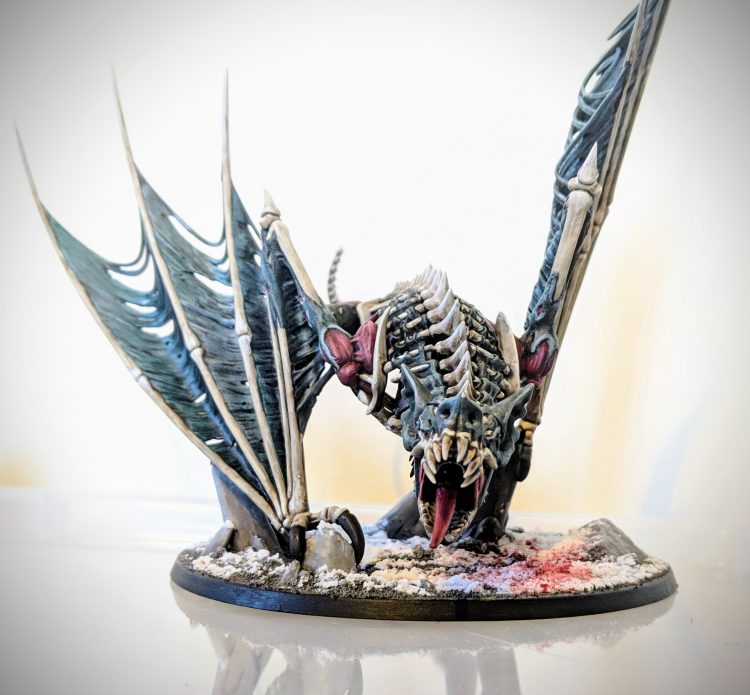
Killing one monster a battle round over the course of a game would mean your effective VP ceiling goes up by five. Note that this is only possible if your opponent brings at least 5 monsters AND that you manage to kill 1 each battle round, AND that you leave enough alive to ensure there is a fresh target each round. As this is a list building article, it’s also important to point out that this goes both ways, if you were to stuff your list with monsters, you give your opponent more opportunity to score these P&P VP, or they could deprive you the opportunity altogether by crafting a list with no monsters in it at all.Once per battle round, you score 1 additional victory point if any enemy MONSTERS were slain in that battle round.
 Credit: Serotonin
Monsters and Battle Tactics
The number of battle tactics to choose from has expanded with the GHB, going from 6 to 8, with the trade off being that (for the most part) each one is harder to achieve. Of the eight tactics:- Five of them can score you an additional victory point if monsters were directly involved.
- One of them can only be scored if your opponent has a monster to kill that turn.
- One of them can only be scored by you if you have a monster in your starting army.
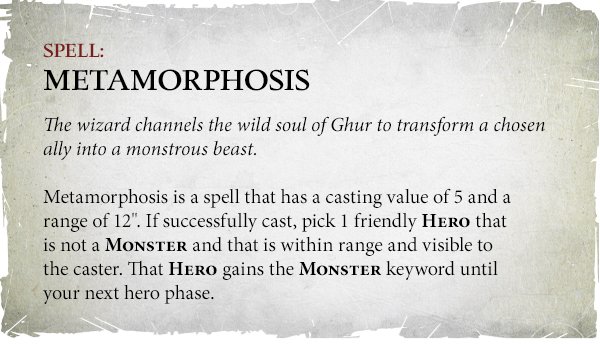
In addition to this, we can also modify what our opponents VP ceiling is. What I mean by that is; if our army has zero monsters in it, and we never use the metamorphosis spell, our opponent not only is locked out of bonus points from Predators and Prey, they also have their list of battle tactic choices narrowed to seven, meaning we’ve reduced their VP ceiling by five, and also made achieving all five battle tactics over the course of a game more difficult.
Metamorphosis
 Credit: Warhammer Community
This spell throws another wrinkle in the equation, as it allows you to temporarily give a hero the Monster keyword until your next hero phase. Now there is an opportunity cost here:
- If you are morphing them when you are taking the first turn that battle round; your opponent has at least one (if not two) turns where they can kill the hero to score a bonus VP.
- It requires a wizard to successfully cast the spell within 12” of the hero.
- You can achieve the bonus points for battle tactics without even having a monster in your army.
- It provides temporary access to Monstrous Rampages, which I have already discussed the fantastic benefits of here. This can be handy if you need to destroy a piece of faction terrain, shut off command abilities in a pinch or simply stomp for some extra damage.
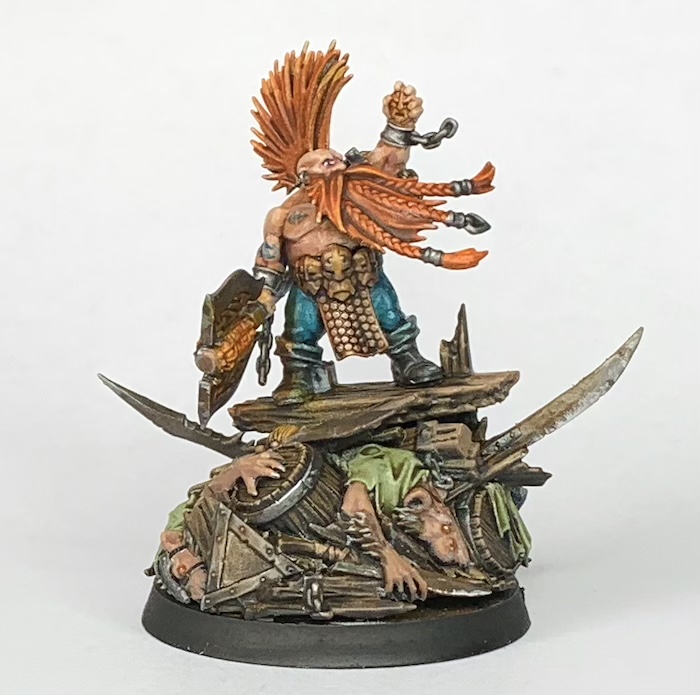 Gotrek Gurnisson - Credit: RichyP
Feral Roar
A generic command ability that lets a Monster act on the top bracket for the Combat Phase, this spicy little CA snuck into the realm pack without much comment initially, but I think it's important to acknowledge the potential strength of it for certain units. Many modern monsters scale quite gracefully and retain much of their potency on a lower bracket, but some degrade quite sharply. Units like the Spirit of Durthu - who's sword attacks go from flat 6 damage to d6 after it's taken a handful of wounds - become much more viable when it has ready access to it's top bracket. On the other end of the spectrum, a Thunder Lizard Bastiladon becomes the stuff of nightmares when you realise it can now just happily sit on a 1+ save even if you manage to put a reasonable amount of wounds on it. There are far too many monsters to categorically break down who the big winners are here, but the chances are if your monster degrades quite harshly, it's gotten better because of Feral Roar's existence.Grand Strategies
Notable here in that this is decided as part of list building; deciding on what your Grand Strategy is will be significant in terms of how you play your matches as it could represent a 6 point VP swing (when you score yours and deprive your opponent of theirs). I would resist the temptation to build a list with a GS in mind, as I think that's some faulty logic when you consider it represents relatively few of your VP potential - instead select a GS once you have a list you're happy with based off of the contents of your army and what your battleplan is. An aggressive list may not want to take Hold the Line for example; as they may run relatively few battleline units which you intend to use to trade with your opponent throughout the game. Likewise, a list that only has one wizard would likely skip Prized Sorcery; as while a Wizard may be used defensively and be protected by other units, it still offers up a juicy target for your opponent in the late game. Two Grand Strategies I want to give particular attention to here are:- Dominating Presence scores if you have more units from your starting army on the battlefield at the end of the game compared to your opponent's starting army. It offers an interesting option for an MSU style list; as if you're running over 12 or so units you're likely to be in a position to score it easily if the average unit count at a tournament is 8-10.
- Predator's Domain is a very strong pick for many lists; as it doesn't present your opponent an easy target in terms of denial during the game. This is scored if you control more terrain features than your opponent at the end of the game, which means it doesn't care what units you have left, just what you're doing with them.
What It All Means
Now let’s revise the statement I made about scoring in light of all of this new information. In general, a player’s total VP (Victory Points) is made up of the following:- A player can score up to a maximum of 15 VP from primary scoring (basic objective control).
- A player can score up to a maximum of 10 VP for achieving the basic battle tactics.
- A player can also score an additional 5 VP from battle tactic bonus points.
- A player can score up to 5 VP from killing the opponent’s monsters over the course of the game.
- A player can score 3 VP from completing their grand strategy at the end of the game.
- 15 from primary scoring of objectives.
- 23 from secondary scoring (all battle tactics completed, all bonus points achieved, at least 1 monster killed in each battle round and your Grand Strategy has been achieved).
Putting this Knowledge to Use
So we’ve established that battle tactics are much more impactful than initially thought, and we’ve talked about all the ingredients that go into this stew, but what can we do with this information? I think there are a few key takeaways that can influence list building that will make battle tactic scoring easier:- It is generally prudent to have at least one monster (or tanky hero capable of becoming a monster) in your list to gain access to bonus VP opportunities. You could deny your opponent the opportunity to score the Monstrous Takeover battle tactic by not including any; but I’m not sure the trade off is worth it.
- Said Monster wants to be very mobile to take advantage of any opportunities that present themselves, and capable of ideally taking out MSU units unassisted.
- Ideally, the Monster should also be a Hero so it has access to Heroic Recovery for healing throughout the game.
- Precise damage output - ideally at range - is an incredible tool to have for the purposes of scoring battle tactics. This means units like Vanari Auralan Sentinels, Kharadron skyships and other long range and/or mobile threats; or spellcasters that have powerful spellcasting to fling mortal wounds at a unit from a safe distance like Lord Kroak or Nagash.
- Mobility has inherent value; as Savage Spearhead, Aggressive Expansion and Ferocious Advance all reward units that are going to be thrust up the board and take up forward positions.
- Monsters that lack some sort of inherent toughness are likely to be a liability more than a strength; as each one increase your opponent's VP ceiling by one.
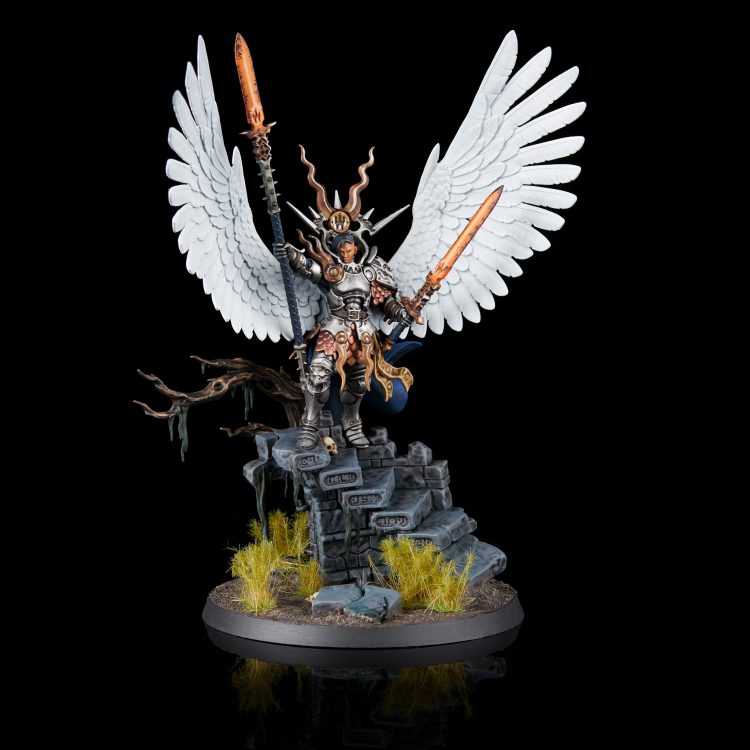 Yndrasta, the Celestial Spear. Credit: Jack Hunter
Example Lists
Let's finish off today with a few examples of some of these principles in practice and an explanation:Ellarr's Nighthaunt
Allegiance: Nighthaunt - Procession: Reikenor's Condemned - Core Battalions: Battle Regiment; Warlord (+ Artefact) - Grand Strategy: Predator's DomainI'm a fan of Nighthaunt in the new edition as the points changes were mostly kind to them, and having access to more CP and Heroic Recovery means keeping some of our support heroes alive is a little easier. However, one thing that NH do lack are Monsters. They have the Mourngul, but it's a Forge World unit and as it's not a hero, lacks access to Heroic Recovery. Enter Mannfred von Carstein.
Leaders Guardian of Souls with Nightmare Lantern (135) - Artefact: Corpse Candle - Spell: Soul Cage Krulghast Cruciator (120) - General - Command Trait: Ruler of the Spirit Hosts Reikenor the Grimhailer (165) - Spell: Shademist Spirit Torment (115) - Artefact: Pendent of the Fell Wind Mannfred von Carstein, Mortarch of Night (380) - Allies
Battleline 20 x Chainrasp Horde (190) 20 x Chainrasp Horde (190) 6 x Spirit Hosts (250)
Units 10 x Dreadscythe Harridans (160) 2 x Chainghasts (75)
Behemoths Black Coach (220)
Total: 2000 / 2000 Extra Command Points: 0 Allies: 380 / 400 Wounds: 119
Mannfred feels like one of the premiere units in the game right now for a number of reasons:
- His points are unchanged from the battletome release, and 380 is a bargain for what you get.
- His Mortarch of Night ability allows some truly outrageous shenanigans, making him nearly unkillable against combat focused armies, as well as providing opportunities to steal objectives late game by charging into a unit, then teleporting away to near a backboard objective, before piling in 3" to put 5 bodies on the point. This sort of mobile hit and run playstyle synergises really well with Nighthaunt.
- His Command Ability means most of his profiles are hitting and wounding on 2s, making his damage output very consistent and more importantly - high.
- While lacking a Ward Save as an ally, his Armour of Templehof and The Hunger abilities combined with Heroic Recovery mean he is extremely difficult to take down.
- He's very fast with 16" movement, meaning he can contribute to achieving battle tactics quite easily as he can always get to where he needs to go, scoring bonus VP as he does so.
As for battle tactics, our opponent will struggle to score Bring it Down as our only monster is Mannfred who is fairly safe against combat armies, and if the opponent rocks heavy magic or shooting we will adjust our playstyle to be more cautious with Mannfred to minimise his exposure. We also make it harder for our opponent to score board control objectives like Aggressive Expansion or Savage Spearhead, as Nighthaunt have always done quite well at establishing early board control through deep striking tarpits onto neutral objectives early on. As for weaknesses with the list, because it lacks a significant ranged damage element it might struggle to get to backline units if your opponent screens well, and relies on Reikenor, Mannfred and the Black Coach to do the heavy lifting in terms of mortal wound output.
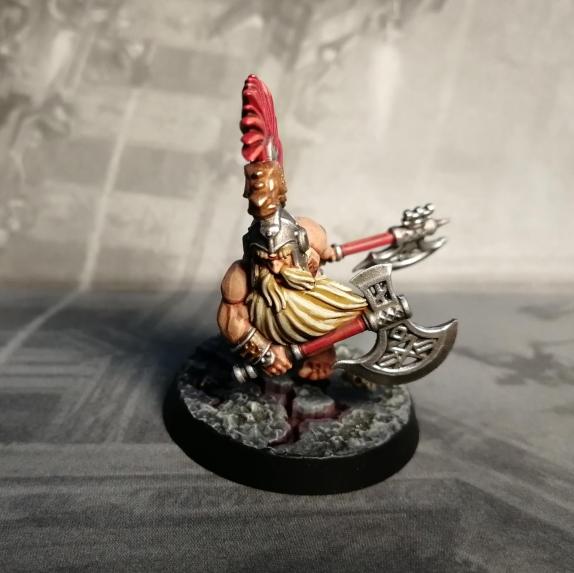 Credit: Lupe
Bair's Fyreslayers
Allegiance: Fyreslayers -Lodge: Hermdar -Core Battalions: Warlord (+ Artefact); Warlord (+ Artefact) -Grand Strategy: Hold the Line3.0 adds something that Fyreslayers drastically needed to be interesting: variety. Not needing to be built around a Warscroll Battalion that was half your army which meant most lists ended up looking the same both on paper and visually. The way core battalions work out you really can make different lists that won’t play the exact same way as each other, which is a lot for an army with 3 non-Hero units to choose from.
Leaders: Runefather on Magmadroth (285) - General - Command Trait: Warrior Indominate - Artefact: Amulet of destiny - Mount Trait: Coal heart ancient Runesmiter on Magmadroth (275) - Artefact: Salamander Cloak Battlesmith (125) - Artefact: Tyrant slayer Battlesmith (125) Runesmiter (120) Runemaster (115)
Battleline: 10 Hearthguard Berzerkers w/ Broadaxes (250) 10 Hearthguard Berzerkers w/ Broadaxes (250) 10 Vulkite Berzerkers w/ Sling Shields and Picks (160)
Other: 10 Auric Hearthguard (250)
Total: 1955/2000 Wounds: 129
Enhancements chosen: -Prayer: Curse -Triumph: Inspired
Now what hasn’t changed is that Hearthguard Berzerkers absolutely are the hammer and the anvil of any slayers list, being both incredibly tough to kill as well as having impressive damage output, and with the changes to how units are taken I’ve opted for 2 units of 10 supported by various Leaders to give buffs and help keep them alive. With tome battalions being a thing of the past for matched play lists, I started building around 2 of the new Warlord battalions instead so that I could take 2 extra enhancements as well as have 2 extra CP through the game when I need them and needing 6 Leaders is not difficult for Fyreslayers.
I build around the Hermdar lodge abilities, being able to ignore battleshock near objectives and in enemy territory, a bubble from the General (on a Magmadroth here) of -1 to be wounded, and the command ability to fight first in any combat phase. None of these are bad, at all.
I wanted to include a Runefather on Magmadroth, and with the new core book relic for a 5+ Ward save as well as the improvements to Monsters (monstrous actions end of charge phase and counting as 5 for objectives) he’s tough to shift and well worth taking now even with a small points hike. With a 4+ save (often 3+ from Battlesmith), a 5+ ward, with rend of incoming attacks reduced by 1, and also being -1 to wound this model isn’t going to be take off the table quickly. And of course the only thing better than one Magmadroth with a 5+ ward is 2 Magmadroths with 5+ ward saves, using the Salamander Cloak for the Runesmiter making him far more survivable so he can get stuck in and start putting Curse on units without fear of just dying soon after. Running two tough Magmadroths like this means I will have an easier time scoring bonus VP through the Battle tactics, while still making it challenging for my opponent to score bonus VP through Predator's and Prey.
Auric Hearthguard are going to be seen more this edition, with all the improvements to monsters you can expect to see more on the table, and a unit of 10 of these guys can pop out of a Magmic tunnel with the Runesmiter on foot well in range of your pick of target with 21 shots, pop All Out Attack to hit on 3+ and wound on 3+ at rend -1 and damage 2 and if you didn’t kill the target then on a 4+ it’s now half move and -1 to all its hit rolls until the end of its next turn. Interestingly, as currently worded using this as part of an Unleash Hell attack, successfully wounding a Monster and rolling that 4+ means that it will now be -1 to hit rolls and half movement until the end of its following turn.
Overall, this list is able to do it all. It can take and hold objectives, it can put out the hurt where needed, and it’s tough as nails to shift off of those points. It’s not going to be choosing to go first or second with 2 Warlord Battalions almost ever, but it doesn’t matter because it can play either way, it doesn’t need to get first turn to get off any all-important buffs like other magic-heavy armies.
Alice's Ossiarch Bonereapers
Allegiance: Ossiarch Bonereapers -Legion: Mortis Praetorians -Grand Strategy: Hold the Line Leader Arkhan the Black (360)Iterating off my most recent list I took to Atlantic City Open, it's pretty much the same. Most OBR characters got cheaper, while units went up so while the original list had 5 Deathriders instead of 10 Mortek guard, the net cost ended up being 2010 so I ditched the riders for more Mortek guard.
Behemoth Gothizzar Harvester (215) -Soulcrusher Bludgeons
Battalion: Battle Regiment
Leader Katakros, Mortarch of the Necropolis (470) -General
Battleline Mortek Guard (10) (140) -Nadrite Blades and Shields
Mortek Guard (20) (280) -Nadrite Blades and Shields
Mortek Guard (20) (280) -Nadrite Blades and Shields
Artillery Mortek Crawler (215)
Total Points: 1960
Due to how my list is designed, Warlord battalions offer little benefit. Ossiarch Bonereapers can't utilize Command Points, and having both characters be unique means I gain no benefit from extra enhancements. Arkhan knows all the book spells so he doesn't even get to use that. I decided it was best to try and use the Battle Regiment to get an early drop. Even if 7 drops isn't very many and will win the drop in most cases, it guarantees that I make first drop in most situations so I can set up my castle and pop Supreme Lord of the Ossiarch Bonereapers before the fighting starts (many fights have gone poorly due to not being able to do so).
With the changes to game mechanics in Age of Sigmar I'm waffling on whether or not to change the legion. Petrifix Elite lost a lot of standing in the eyes of the player base after the change of their legion trait from +1 to saves to Rerolling 1s to save but with the inclusion of caps to saves at +1 and mystic shield turning into a +1 to saves, rerolling 1s are at more of a premium now. They won't get +1s to save from Katakros but Arkhan can Mystic Shield multiple targets and still get the Reroll 1s. A tempting decision.
The new rules also saved the Harvester. In my experience the Harvester can be a bit of feast or famine, it's not particularly hardy for a monster at only 10 wounds and I found either it gets a juicy target to reap for healing or it doesn't do very much. I was about to replace it with another Crawler due to them costing the same. The new ruleset, and especially the meta outlined in General's Handbook 2021 really emphasizes the use of monsters and this is about the only Monster I can get a hold of (Short of Arkhan or including a Gargant). The Monster abilities give it a degree of flexibility it didn't have before so at the 11th hour the new ruleset saved it.