 This website uses cookies.
  Goonhammer Reviews: Storm of Iron, by Graham McNeill
One note: I'm not going to bother hiding spoilers in this review. I think this book is older than some of our patrons and at least one Goonhammer contributor, and beyond the statute of limitation for spoilers.
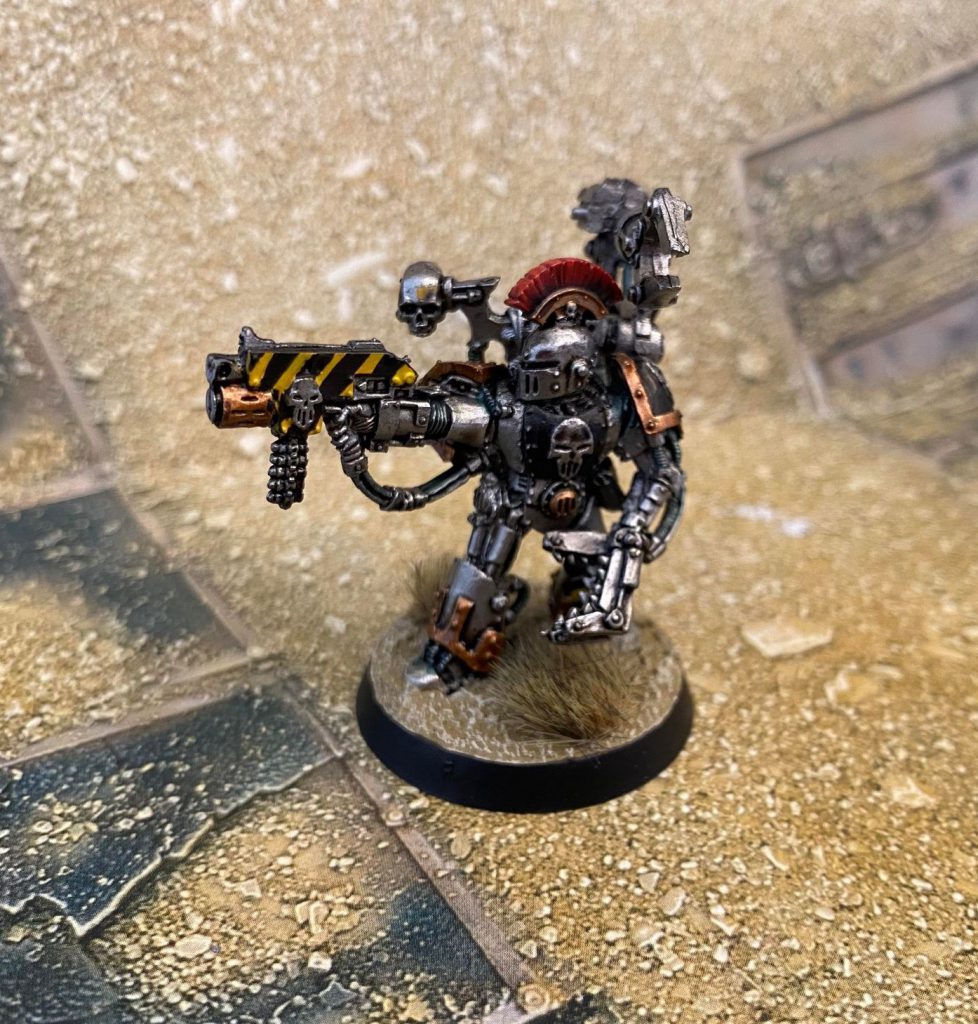 Iron Warriors Warsmith. Credit: Magos Sockbert
The Plot
Storm of Iron is, at its core, an Apocalypse novel. A massive Iron Warriors Grand Company lays siege to a huge Imperial fortress complex at Hydra Cordatus, while a multi-faction Imperium army stands against it. The Iron Warriors have Chaos Space Marines (Legionaries, Terminators, Land Raiders, Vindicators, Rhinos), Daemon Engines (Defilers are specifically named, and some of the other weapons could be early iterations of what became Forgefiends), Lost and the Damned (mortal Traitor Guard, Cultists, and slaves), and even a few Traitor Titans. Indeed, the Warsmith has somehow acquired the services of the infamous Dies Irae of Legio Mortis. Opposing them is the 383rd Jouran Dragoons, a combined arms force; the Skitarri of the Adeptus Mechanicus who maintain the Citadel, Titans of Legio Ignatum, and eventually the Imperial Fists 3rd Company and Tor Garadon's immediate predecessor, Captain Alaric Eshara.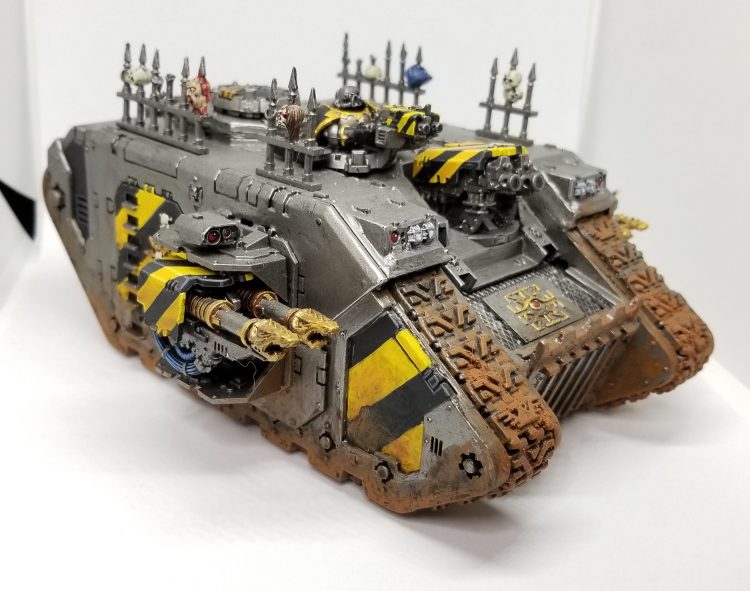 Credit: Robert "TheChirurgeon" Jones
They apocalypse fight.
The Characters
We get six or seven viewpoint characters spread throughout the Imperium and Chaos factions. The Iron Warriors have Honsou, a 41st Millennium-era Chaos Space Marine created (in part) from Imperial Fists geneseed who is effectively a Captain; Captain Forrix, a Cataphractii Terminator who was once the First Captain of the IVth Legion but owing to 10,000 years of burnout lacks ambition; and Captain Kroeger, another Heresy-era Iron Warrior who is one step away from becoming a Khorne Berserker. These three champions serve under the Warsmith, an ancient Iron Warriors leader who is on the verge of ascending to Daemonhood. By taking Hydra Cordatus and its treasures intact, the Warsmith will gain the favor of the Chaos Gods and not be transformed into a Chaos Spawn. These three warriors loathe each other and while they will not outright betray one another (doing so would annoy the Warsmith), they are more than happy to arrange for unfortunate assignments that makes the others look bad. Well, Honsou and Forrix do. Kroeger just wants blood and skulls at this point.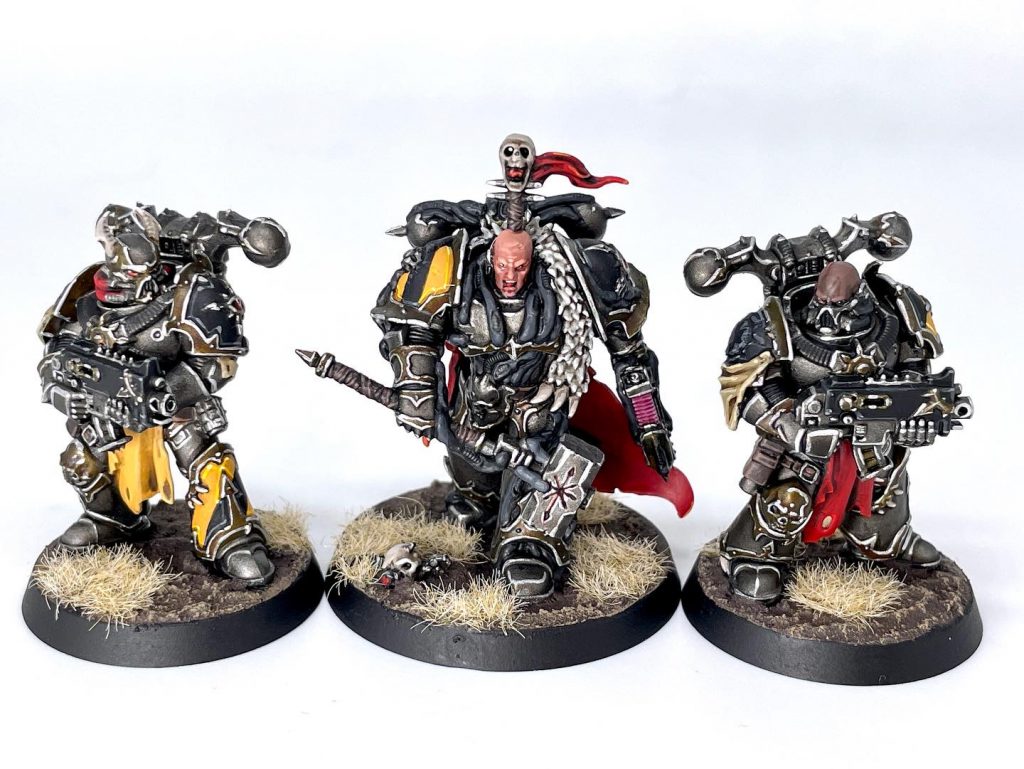 Iron Warriors Chaos Lord and Space Marines. Credit: SRM
Against them stands the Imperium. The main viewpoint characters are Julius Hawke, a bored Guardsman with a history of disciplinary issues; Castellan Vauban, a hardworking Imperial Guard commander who is fully aware that he is outmatched by the skill and experience of the Iron Warriors; Lieutenant Colonel Mikhail Leonid, Vauban's second in command and the one with the loyalty of the troops; Magos Naicin, an Adeptus Mechanicus Magos who coordinates between the Mechanicus and the Guard for running the Fortress (and has a secret or two up his bronze mask), and Lieutenant Larana Utorian, a captured Dragoon who manages to impress both Kroeger and (unfortunately for everyone [1]) his armor with her tenacity and anger.
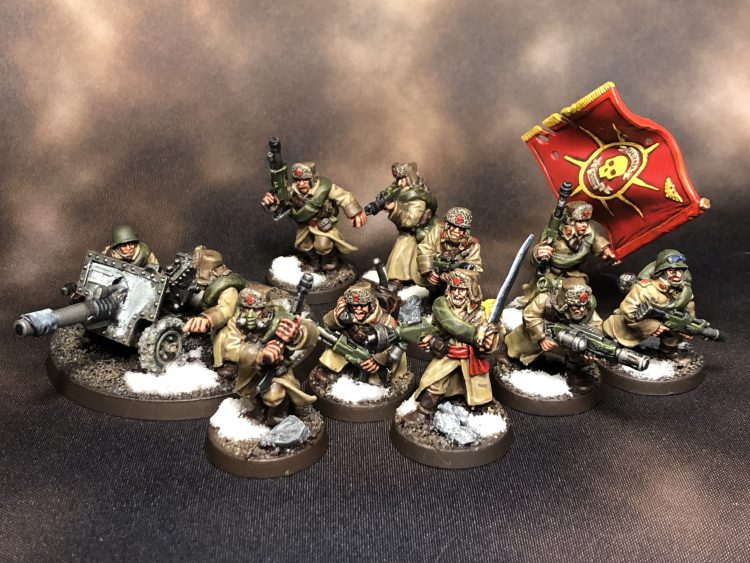 Valhallan Imperial Guard. Credit: SRM
The two sides obviously contrast with each other. The Iron Warriors are ancient experts in siege warfare. The Warsmith, Forrix, and Kroeger have been at this since the Horus Heresy, and have forgotten more about siege warfare than entire generations of Castellans of Hydra Cordatus have ever learned. The main difficulties that they face are the fact that the three champions hate each other, their Daemon engines are pretty temperamental, and they treat their human serfs like garbage. Oh, and Kroeger has trouble focusing on what he's supposed to be doing.
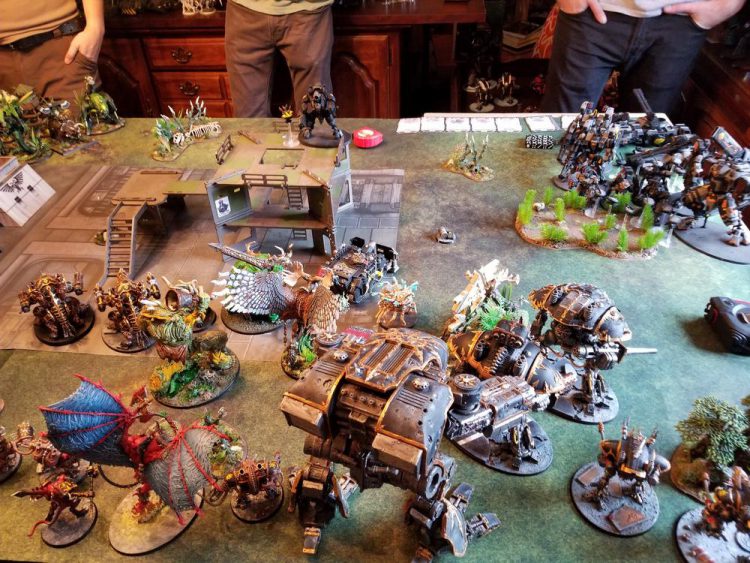 This brave Chaos Warhound ate shit and died immediately upon arriving on the battlefield
By contrast, the Imperium forces may be outmatched in terms of experience, doctrine, and resources, but they are far more unified than the Iron Warriors Grand Company. Castellan Vauban and Lieutenant Colonel Leonid are able to inspire their troops and react to the Iron Warriors siege tactics as best they can. When they get reinforced by the Imperial Fists, they easily integrate with the sons of Dorn to defend Hydra Cordatus. The problem for the Imperium is that they aren't as unified as they could be: the Titans of Legio Ignatum have some, ah, discipline problems when it comes to Legio Mortis Titans, and the Adeptus Mechanicus' agenda is sufficiently insane as to warrant the rest of the Imperium trying to kill them all. The outcome of the battle is never really in doubt, but that does not stop the mortals of the Jouran Dragoons from doing everything possible to stave off their fate.
Why Is a 25 Year Old Black Library Novel Worth Reading at This Point?
Eye of Terror: Reign of Iron is, effectively, a sourcebook adaptation of Storm of Iron. As I mentioned in my review of Reign of Iron, Perturabo takes the place of the Warsmith (the ancient planner who has masterminded an apocalyptic siege), and Kravek Morne is a combination of Honsou and Forrix. He has the appearance of Forrix but with the overall characterization of Honsou. This has the Iron Warriors and their armies fighting against a combined Imperium force (now including Knights, the Adepta Sororitas, and the Iron Hands). Indeed, one of the most iconic moments in Storm of Iron (the fall of Dies Irae) reappears in Reign of Iron, in which loyalists and traitors fight in the shadow of a Titan duel and run away as fast as they can when it appears the Titans are about to explode. The end of the story is also similar: Chaos is winning and Perturabo's grand plans are proceeding towards completion. This is oddly similar to 500 Worlds: Titus, which is an adaptation of McNeill's Uriel Ventris books.I do so hope for a clash between Morne and Titus come 11th Edition.
Also, let's be honest: This story is a lot of fun and reading a story of an Apocalypse battle is probably a lot more fun than actually playing a game of Apocalypse with the Reign of Iron rules. The book gives individual guardsmen fighting against impossible odds the chance to shine at key moments and affect the entire battlefield, which is not something that is altogether helpful for actual Apocalypse games (where a T3 1W Guard model is going to get pulped by a Knight Despoiler).
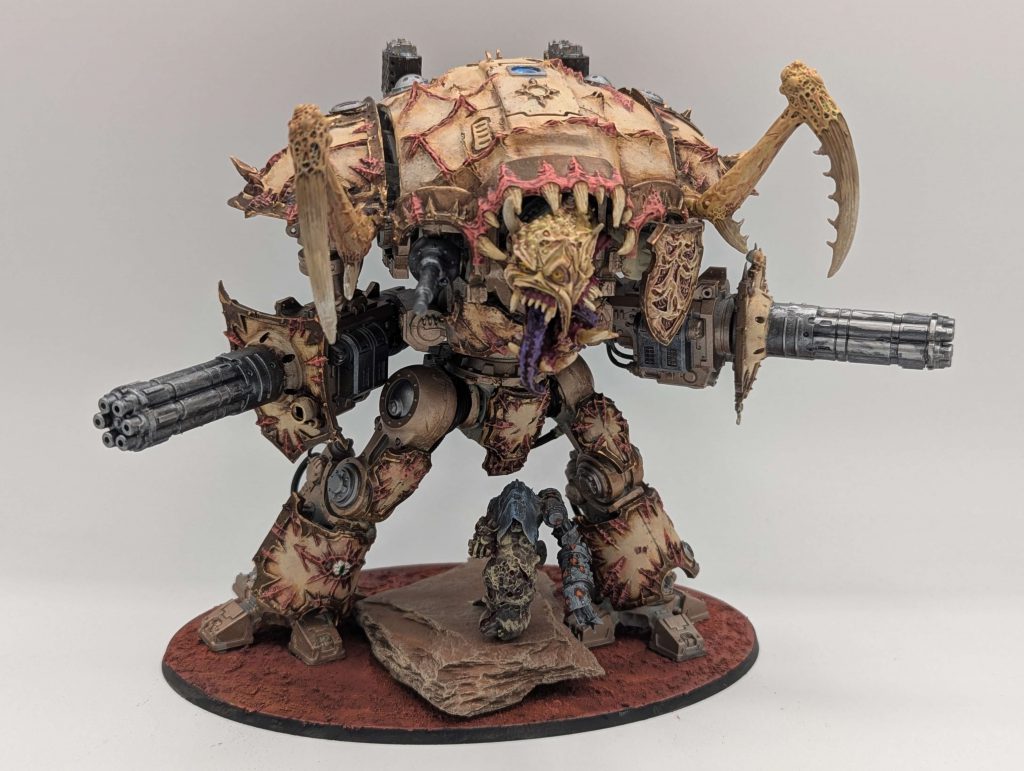 Double Gatling Knight Despoiler. Credit: Norman Greenburg.
This book is an exciting companion to Reign of Iron, and is well worth your time and energy. Especially when you're painting your new Defiler and Iron Warriors army because it's also an eBook.
Quick Notes:
1. The characters in this story would later reappear in many of Graham McNeill's other novels: his Ultramarines novels and the Forge of Mars trilogy. We would learn the backstory of McNeill's Iron Warriors in the Horus Heresy novel Angel Exterminatus.2. McNeill has some pretty interesting ideas on what the Iron Warriors can do with the Obliterator Virus, converting captives into obliterators. Indeed, it's strongly implied that the Warsmith managed to gain the assistance of Legio Mortis by giving them a starship infected by the Obliterator Virus. Specifically, a Tyranid Hive Ship.
3. The Adeptus Mechanicus being jerks for no good reason continues apace in this novel.
Until next time!
(1) Except Uriel Ventris