 This website uses cookies.
  Goonhammer Reviews Tomodachi Life Living the Dream: Semi-Perfect Island Getaway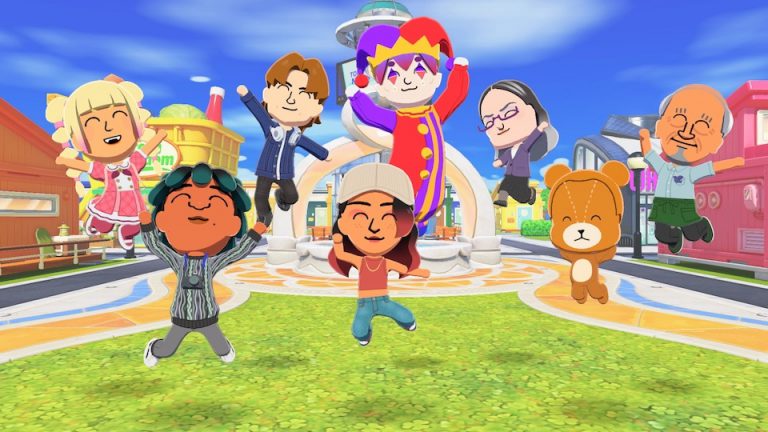
Since the demo released, I’ve been tinkering with the game almost every day, and with the full release, my Switch has been in a constant state of near death as I cart it around and play for hours at a time. I find myself increasingly picky with games, especially as they balloon past 60 dollars USD, often finding myself justified in my suspicions and tight pursed attitude towards my primary hobby, as games just don’t seem to go the distance anymore. Tomodachi Life may not be the greatest game you’ll ever play, or even a game you have thought you would play, and it certainly isn’t for everyone, but it also is kind of for everyone, so my goal today is to convince you that you should take up the mantle of overseer of an island of weird little people that you put there, because it will result in one simple outcome: satisfaction.
Island Breeze: Setting Up
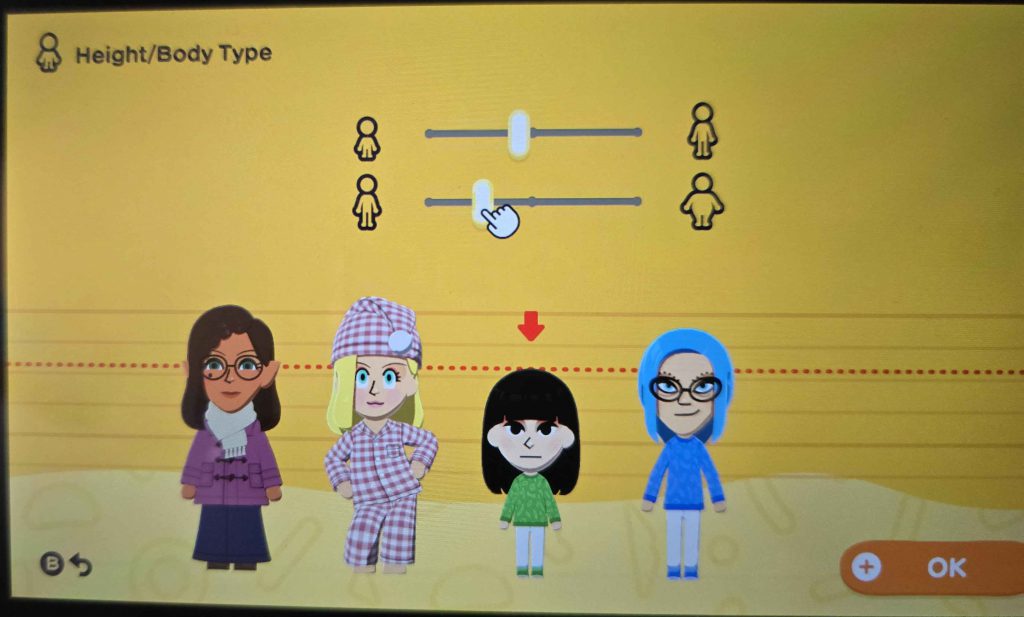 You're going to spend a lot of time not just adjusting your Miis individual looks, but also their sizes in comparison to all of your other inhabitants. Why is this a picture from my phone, you might ask? Keep reading.
Tomodachi Life: Living the Dream is the latest in the Tomodachi Life series, which spans Tomodachi Collection (published in Japan in 2009 for the Nintendo DS but never published abroad), and the internationally released Tomodachi Life in 2013 for 3DS (which did release in the states), making Tomodachi Life: Living the Dream a somewhat unlikely successor with a 13 year gap between titles. The concept of the games hasn’t changed much, though: players take on the role of an overseer of Miis, the avatars that became famous on the Wii, and help them navigate social situations in their daily lives. The game is somewhat similar to Animal Crossing in that the player is tasked with managing Miis needs, social interactions, and designing things like clothing or interior design. It is slightly different from Animal Crossing, though, because the player Avatar is never directly controlled on screen by the player (so, no Villager based on ‘you’), and Tomodachi Life has far less focus on the construction and town management that is key to Animal Crossing.
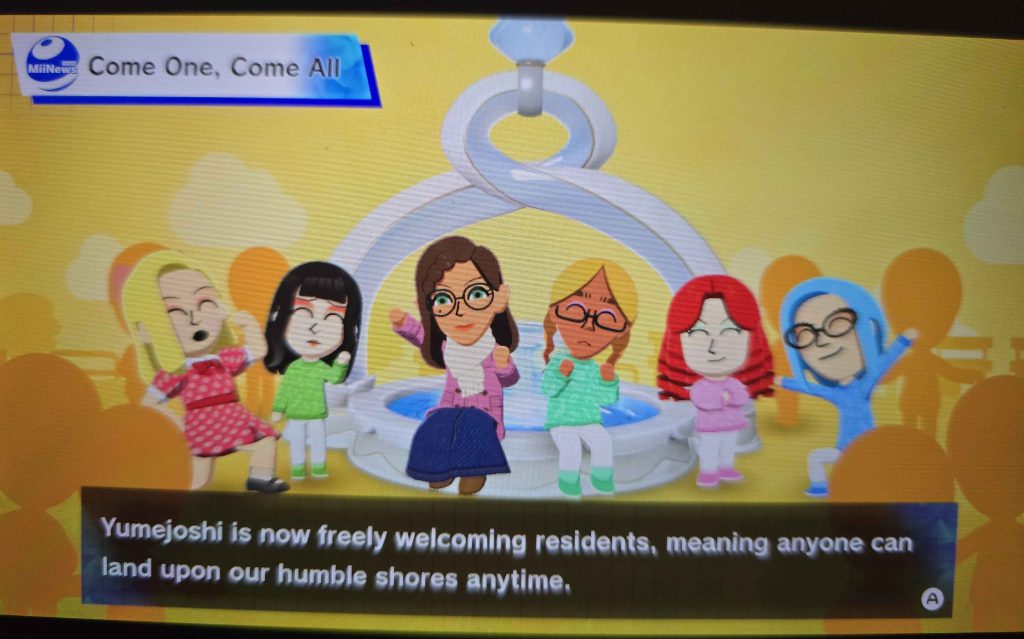 The rolling "achievement" news stories for your island growing are cute, and help you see all your Miis together.
Tomodachi Life: Living the Dream ups the ante a bit by giving the player far more control over the island they populate, with a much more elaborate building engine and customization options for everything ranging from your Miis to clothing, food, and more, using a fairly easy to use but hard to master pixel by pixel drawing tool. As your Miis live on the island, they’ll interact with each other, forming various types of relationships that can range from friendly to romantic and even antagonistic, and the game gives surprisingly broad ability to set how those relationships can play out. When making Miis, players can set their gender identity (Male/Female/Non-Binary), their pronouns for Non-Binary Miis (He/She/They), and their dating preferences (Male/Female/Non-Binary, with the ability to select as many as one likes). The inclusion of queer and broad dating preferences alone is a great detail, but you can even create an island in which characters will simply be friends by swapping their dating preferences to identities that aren’t present on your island (How do I know? Because my entirely female and non-binary lesbian island had no one dating for the first day and a half until I realized I hadn’t set their dating preferences). Your Miis will exhibit preferences for food, activities, social interactions, and as their happiness levels rise, you can help assign them various quirks like standing poses, walking styles, catchphrases, and more.
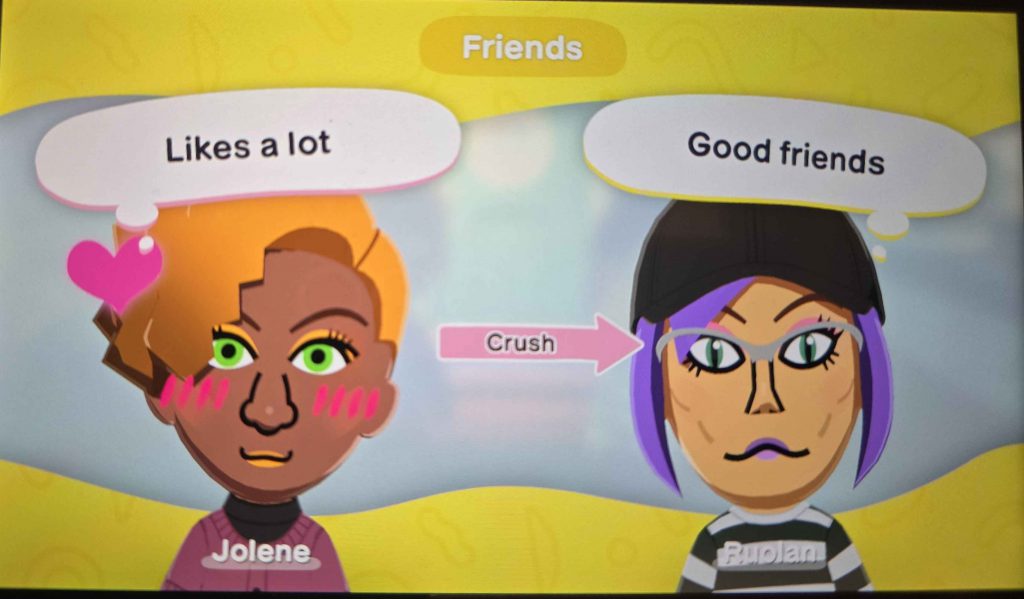 You don't have "goals", but your Miis do, and that's what really matters.
There’s really no “goal” to the game, other than creating your Miis, watching their various situations play out, and helping to develop the island as it grows. You can have a total of 70 Miis on your island, and while I did see some players complain that it seemed like a small amount, I started to find it becoming a little daunting once the number began to exceed ten in order to keep up with everyone! Miis also get personalities assigned to them based on your settings, meaning you can help create a pretty broad array of 12 different personality types to see how they interact (you can also edit and change them at any time). Miis have a pretty wide array of customization in general, allowing you to pick face shapes, eyes, mouths, noses, and more, and you can utilize a Face Paint feature that is limited mostly by your creativity and artistic skill. I’m going to level with you: I’m not very good at it, so I’ve mostly just been using the given face tools, and I’ve still managed to make Miis who don’t look the same. You can also pick their voices and tool around with them, making them high, low, or somewhere in between, and have them talk as fast or slow as you like, truly allowing for some completely incomprehensible voices.
Mii and You and Mii: Living Vicariously
As I mentioned, there’s no real goal. You can’t exactly “win” Tomodachi Life, much like you can’t really “win” Animal Crossing; the goal is whatever you set it to be for yourself, and there is a lot of freedom in that rather than loss of opportunity. One of the things I love about Tomodachi Life is that the game rewards checking in often, but not obsessively; I’ve gotten a lot of progress and enjoyment out of playing for a bit at a time as my island grows, and your Miis will actually go about their days and lives without you being present; they can catch you up when you next turn the game on, and the in game news station will even give you a recap after a certain amount of hours have passed since you last played.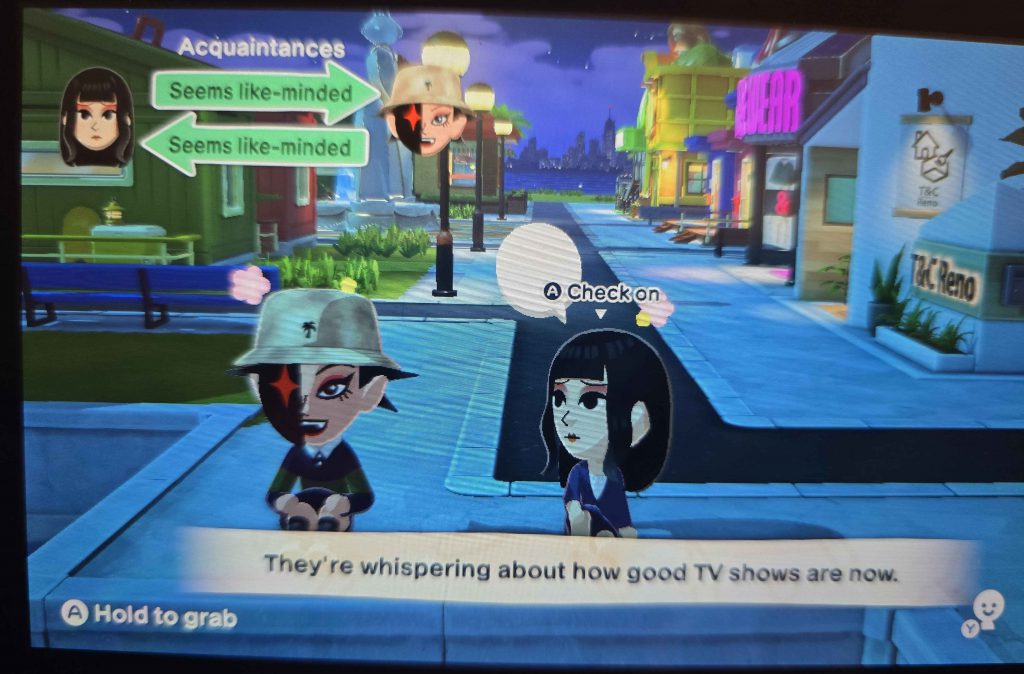 Who doesn't love seeing the island Office Lady chat about how good television is with the resident Chuuni weirdo wearing half a mask and a hideous hat (she won't take it off).
Tomodachi Life is a game that should not, realistically, be the game that I am consistently thinking about. I primarily spend my time playing competitive shooters like Deadlock, Marathon, Hunt, or action games like Monster Hunter or a three hundredth playthrough of Dark Souls 2. When I’m not playing those, I primarily play mobile games, and lately my mobile game library has grown while my “premium” or “AAA” game library has shrunk, because I find those games returning less and less return on investment for what tend to be expensive but short experiences that sometimes aren’t even that enjoyable. But I often tend to respect but not invest heavily into “lifesim” games, so putting into words exactly why Tomodachi Life has me so invested may come across as lame: I just find it fun to watch my Miis have a good time.
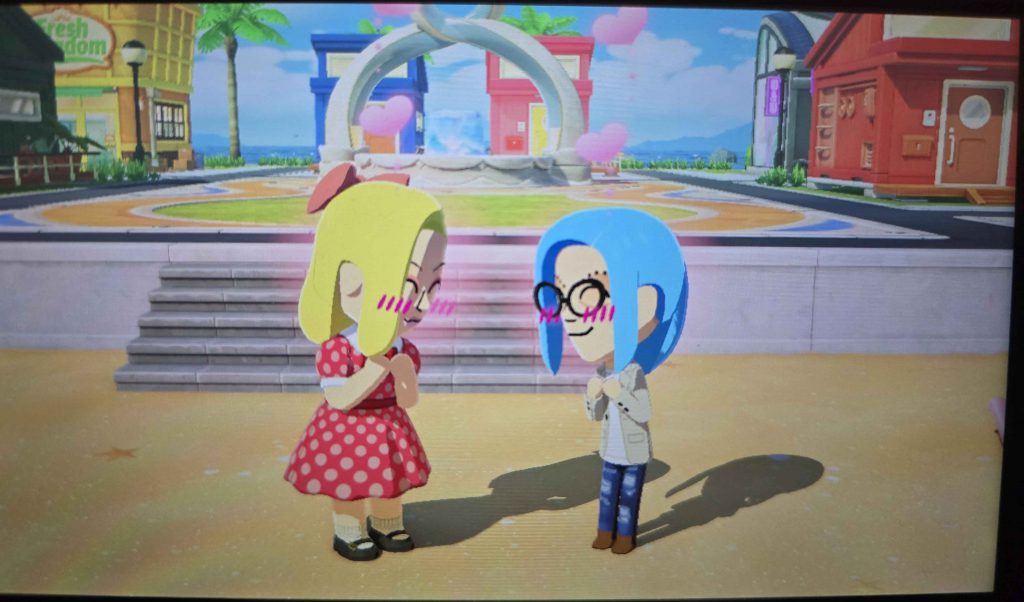 My first island romance once I fixed the dating settings, and so far my absolute favorite. Adelaide the Maid and Xiaoyu are too adorable.
Because I can set most of the parameters of my island, my Miis are all women or non-binary, and are all only interested in dating women/non-binary people, creating the perfect Yuri Utopia. But beyond that, the romances between Miis isn’t even really what I enjoy. It is mostly just watching them have goofy conversations, talking about things, spreading island Lingo, or developing their own little webs of interactive social threads. My friends have spent most of their time creating their favorite fictional characters and shipping them together, while I’ve also seen people posting absolute creatures (like the talking buttholes) or memes, helping with the feeling that Tomodachi Life is exactly what you want it to be, rather than giving everyone the same interactions and outcomes.
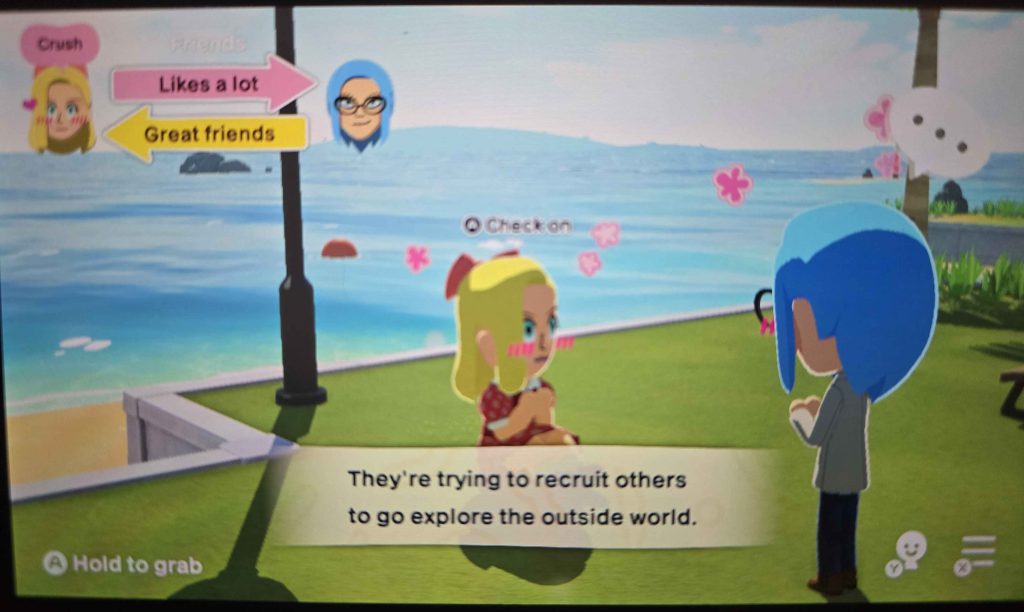 Seriously, how cute are these two?
The world is pretty awful right now, and is unlikely to get much better, but my Miis don’t need to know about that. Instead, they can talk to each other about their love of Stephen Chow movies, making coffee, strawberry cheesecake, or whatever other things I either help steer them towards or they develop on their own. I can watch my gay little Miis shake maracas at each other for hours at a time, buy them new clothes and decorations, and even watch as island drama unfolds as relationships strengthen or deteriorate in real time. I am a benevolent Goddess, but not one that has to control every aspect of my Miis' lives, allowing the will of the island to take things into new directions. And when I’m bored or have to do something else, I can step away from watching my island and know that when I come back, I’ll have lots of new things to check on.
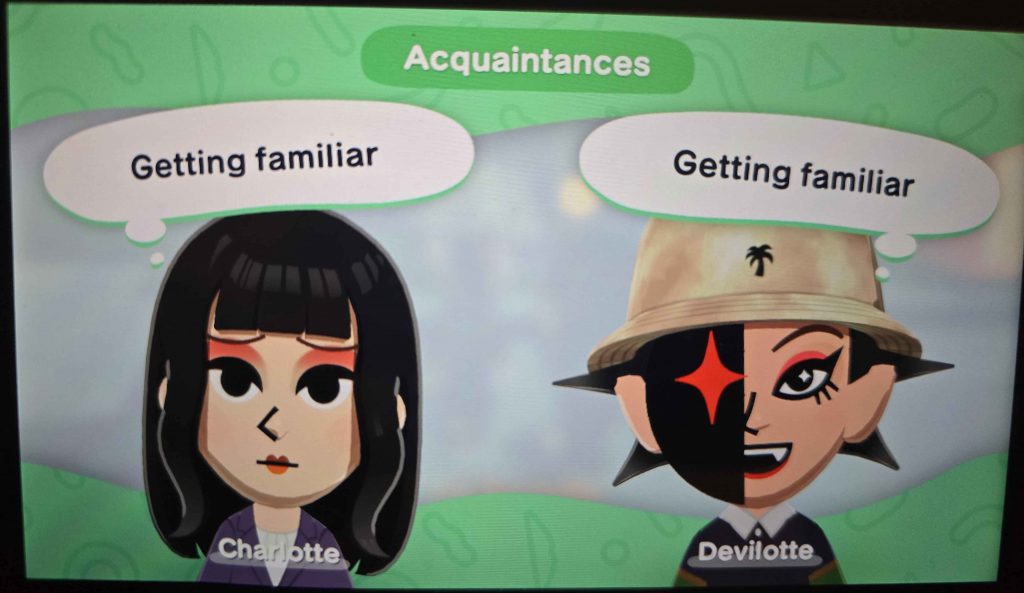 These two seem like they'll be great friends before long. Definitely have a lot in common.
When I come back, I also have a lot I can do. I can buy food, clothes, interiors, and design the island and build it how I like. The game has seasonal aspects as well, so there's reasons to keep checking back in throughout the year to see what is new; clothing in the store changes every day, as do things like the Night Market with mystery bags, and interacting with your Miis and making them happy will generate money for you to spend on the island itself. Your Miis will also ask you for help (purple ! sort of icons) or to play games (green ! icons), and doing so will reward you, as do things like watching their dreams or helping solve interpersonal issues. You can always steer them away from things too, such as romances or fights, or choose to just let things happen as they happen; the result is really up to you. The nicest thing is that your Miis are always happy to see you, so your benevolence is never wasted.
The Only Way to Lose Is Not to Play
I’ve certainly seem some criticism of the game, and I think some of it is very valid, including the bizarre restrictions on sharing screenshots with friends easily. It is a totally baffling decision that’s resulted in seeing people resort to taking pictures of their Switch or TV with their phones in order to share what is going on in the game, and seems like the monkey paw curse inflicted on a game in which your Miis can say literally anything you tell them to say out loud, and allows you to draw whatever you want to draw on any canvas available to you. This is why every image in this review is taken from my phone, by the way.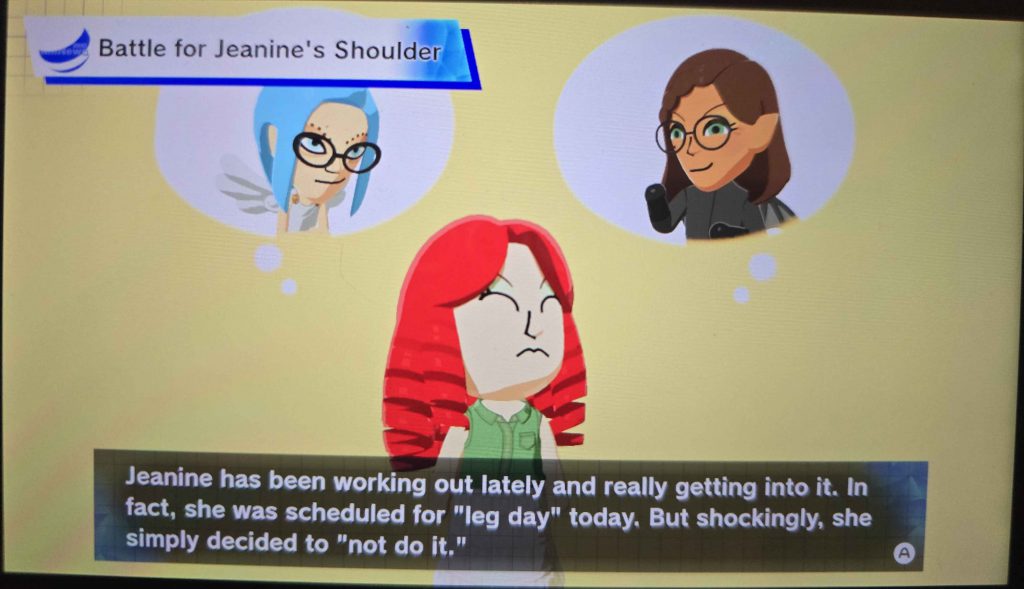 Seeing what your Miis are doing, thinking about, or anything else going on is the magic of the game, because almost none of it is in your control.
There’s also no real online play, and the biggest thing one would want, the ability to share Miis with other players, doesn’t exist. This is, again, probably some overly cautious step taken by Nintendo, but it sucks when the company tends to forget that not everyone lives in a country with the population and geographic density of Japan, meaning that my friends across the country from me and I can’t share our Miis. I will take a moment to shout out the website TomodachiShare, which helps circumvent this problem, but this is a fan project trying to fill a gap in functionality that should be there from the start.
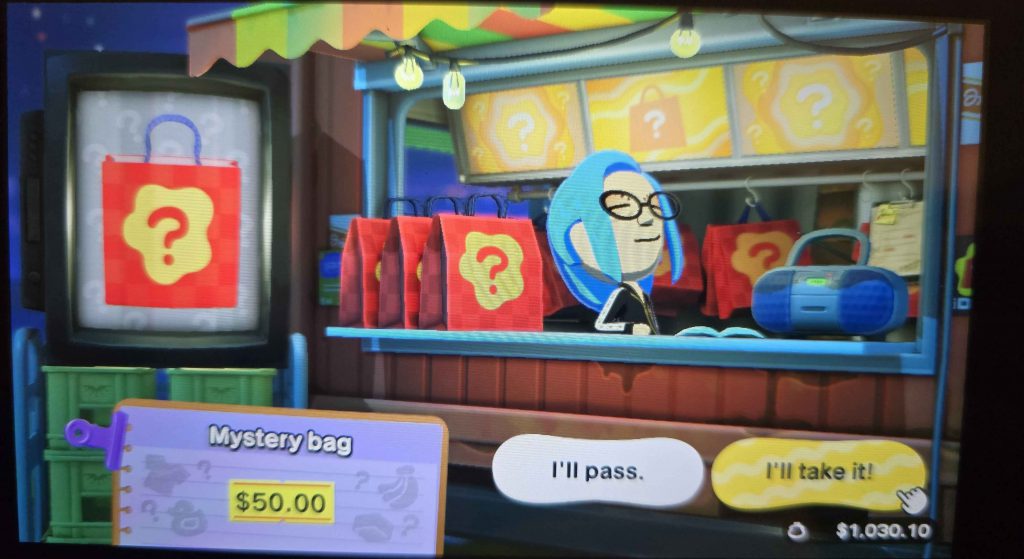 So, yes, you're getting these screencaps from my phone because I can't actually get them off my switch, so enjoy this (unforced) Analog Aesthetic.
Some of the other criticism, though, has resulted in a somewhat more confused response from me. Some of the criticism I’ve seen is that the game is only going to give you “what you give it”, which I think is a bizarre thing to say because that can be, and is, true of just about anything. As mentioned, I play a lot of competitive shooters, and I don’t think you can argue that you aren’t getting what you give in those either; if you play Deadlock once a week a single time, you’re likely going to have a bad time because you aren’t investing in getting better, and the same is true of Marathon, a game in which you can lose thousands of credits worth of equipment in 30 seconds after spending 5-10 minutes prepping your Run, followed by then tedious attempts at regaining those credits and items in subsequent runs with often subpar equipment.
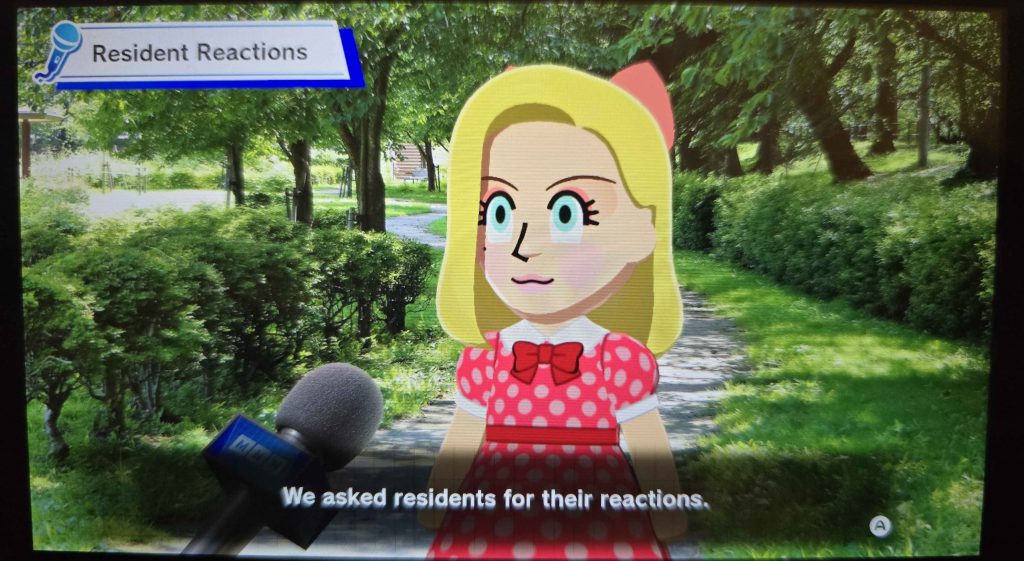 Everything happens so much, really.
My assumption by what is meant by this critique is that Tomodachi Life needs you to be creative, which is not always an easy ask for many people. You have to make your Miis, you have to design their personalities, and you have to set up the island for the situations to occur. While you can have the game help you with randomized designs, it still requires some level of personal investment into the game ranging from the name of your island to the Miis on it, how they’ll interact or navigate their relationships, and how involved you want to be in that process. Like most sandbox style games, Tomodachi Life will not make the sandcastle for you, but I find it does an exceptional job of trying to make it as easy as possible for that to happen.
Low Cortisol Gaming
The concept of “fun” is always a wild thing to debate and measure. How do you define “fun”? Who is having it? How? Well, as pedantic online arguments go, the idea that you can’t quantify “fun” has a bit of merit, because people all have different tastes and preferences, but the less annoying way of viewing this question is simply trying to understand what the game wants you to do: Tomodachi Life is a sandbox, a toy, an amusement, and even a sort of digital terrarium. It asks very little of the player and gives far more in return, is playable by almost any age or skill level, and is totally fine with your wandering off for days at a time: your Miis will manage without you, but are happy when you come by. Even Animal Crossing instilled a sense of guilt in the player for not coming back for long periods, but Tomodachi Life really just wants you to come by and spend a bit of time with the Miis before you have to go back to whatever it is you have to do in your daily life.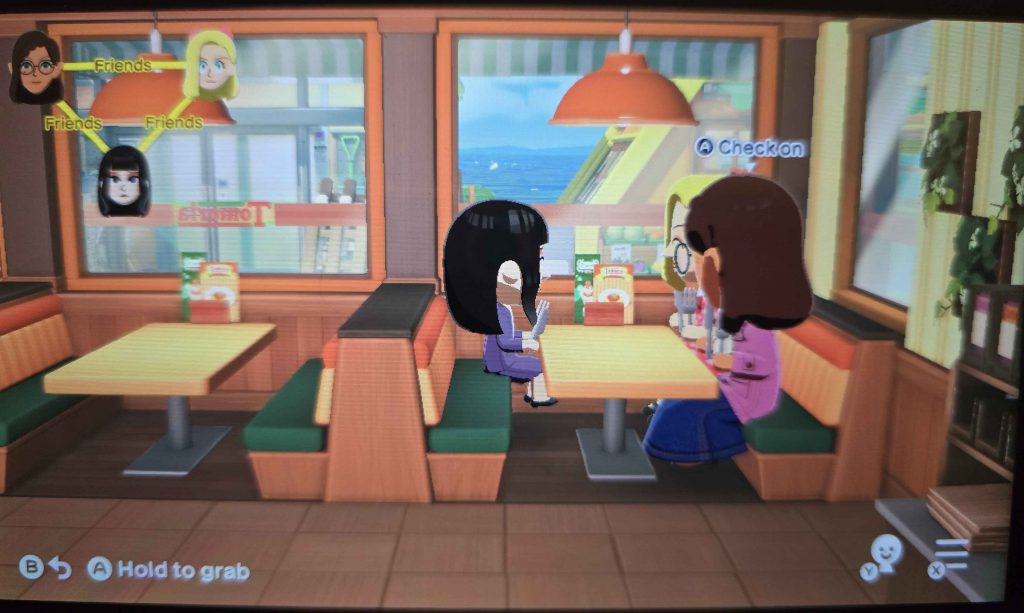 Seeing Miis social circles swell is a great charm and sometimes shocking reward as they'll make connections without you, and can extend beyond 1 on 1 situations.
I love that, and I love this game. I have not thought about a game this way in quite a while, and I don’t know when the next time will actually be. My daily life is busy and hectic and often filled with numerous responsibilities I’d rather I didn’t have to manage, my professional life takes up the majority of my time not taken up by my domestic ones, and looking at anything happening beyond my front door just tends to stress me out and make me realize that what I do has little impact on those things, but they have a big impact on me and mine. So, I’ve been finding the time spent with Tomodachi Life relaxing and charming; as it stands I’m at 15 Miis and working towards 20, numerous are dating, some are about to move in to each other’s homes, and it delights me whenever I have the time to turn on my Switch and play it. The fact that it works great on Switch or Switch 2 makes it accessible, and at 60 dollars it feels like an oddly bargain price for a functionally endless game while I stare at ads for games asking me for 80 or more for less than ten hours of content.
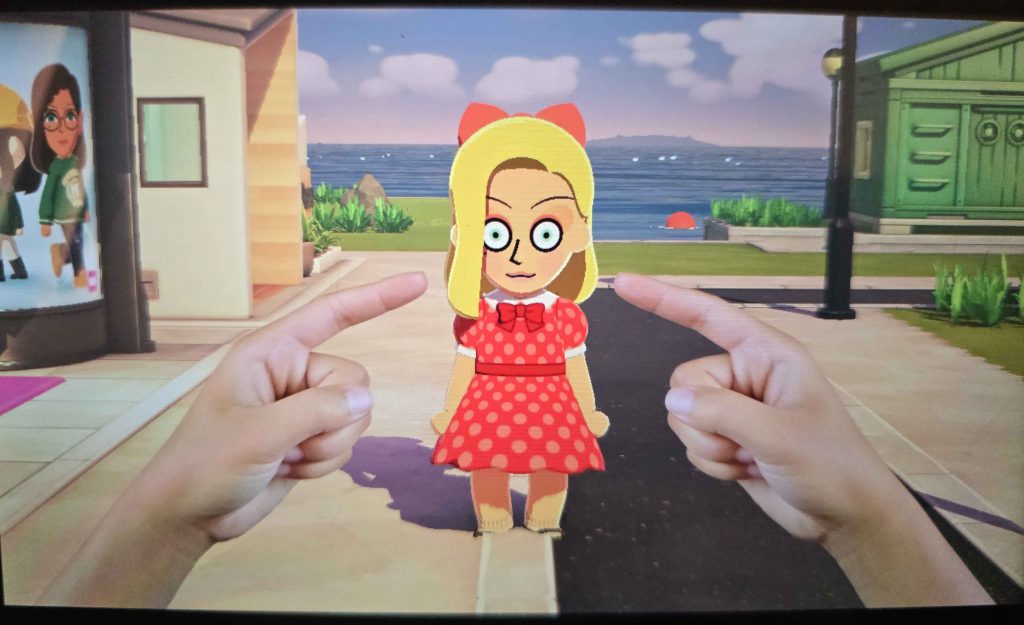 You will occasionally see "Your" hand at times, such as when your Miis need help.
So whether you want to make your friends and loved ones, your original characters, or your favorite fictional characters and see who they date or hate, Tomodachi Life: Living the Dream is an amazing way to relax, unwind, and dare I say, have fun with a game that doesn’t want a lot from you except your attention, and it’s an investment I think you won’t regret if you allow yourself to have fun, be a little cringe or silly, and create a goofy little world where the biggest problems people are going to have is debating clothing choices or how into “singing Citypop” they are.
Have any questions or feedback? Drop us a note in the comments below or email us at contact@goonhammer.com. Want articles like this linked in your inbox every Monday morning? Sign up for our newsletter. And don't forget that you can support us on Patreon for backer rewards like early video content, Administratum access, an ad-free experience on our website, and subscriber-only content covering competitive Warhammer 40K!