 This website uses cookies.
  Horus Heresy Ruleshammer: Shooting Reactions
Reactions in the Shooting Phase
During the Shooting phase, the Reactive player may react when any enemy unit makes a Shooting Attack targeting a unit they control. Before any to hit rolls are made, the Reactive player may choose to expend one of their Reactions for that Phase to have the unit targeted by the Shooting Attack either Return Fire or Evade.We're only looking at Return Fire today.
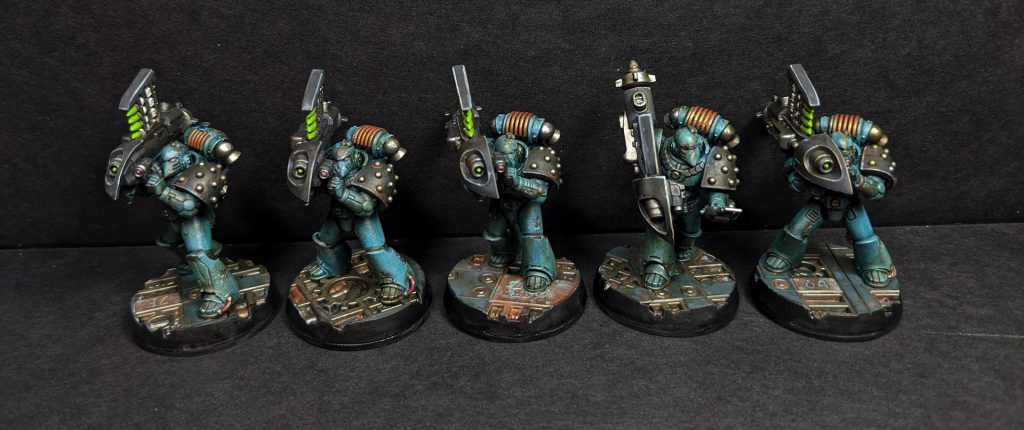 Alpha Legion Missile Launcher Heavy Support Squad: Credit Lupe
Return Fire
The Reacting unit may make a Shooting Attack, targeting only the unit that triggered this Reaction and following all the usual rules for Shooting Attacks.The rest of the text after this point covering barrage and template weapons is irrelevant so we'll stop there. The text change to this portion of the rules doesn't particularly matter, it's just making things a little more precise.
The huge change is in when this all resolves. Instead of Return Fire (or Evade) going off after shooting (from the first weapon selected) has already been resolved, it actually triggers beforehand. This means that, in theory, you can kill models in the attacking unit, or pin them, before they actually get to roll dice to shoot you at all. Let's dive into this in detail and look at the shooting attack process.
The shooting sequence (Age of Darkness rulebook, page 166):
- Nominate a Unit to Make Shooting Attacks
- Choose a Target
- Select a Weapon
- Roll to Hit
Before "any" to hit rolls are made is also more specific than it first appears - you must do this before an opponent rolls to hit at all, so you cannot wait for them to get to their second weapon before declaring. You have to react to the first weapon they choose to fire.
So let's say we get to this point - the active player has chosen a unit to shoot, has selected a target, and chosen a weapon. Now the reactive player chooses to expend a reaction and selects to Return Fire.
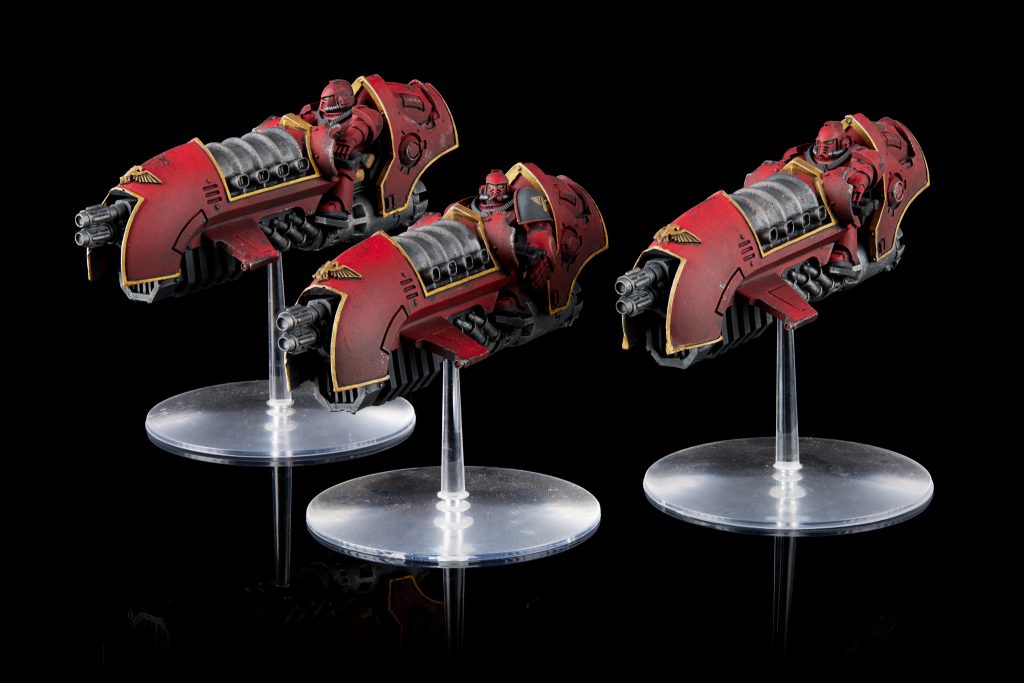 Blood Angels Jetbikes. Credit: Jack Hunter
At this point the reacting unit makes a Shooting Attack targeting the attacking unit (and only that unit). They run through this whole shooting attack sequence themselves, right now, before the active player completes their own sequence. Wound pools will be assembled and casualties suffered. If necessary a Pinning check will be made.
Once the entire sequence is complete the active player resumes their own sequence. They roll a D6 for each shot fired, and here we run into the first real ambiguity of these rules - are models removed from play as casualties able to shoot? It seems likely they cannot, as this is the step at which shots fired are counted (step 3 of the sequence merely identifies models eligible to shoot) and models that have been removed as casualties cannot shoot. However there is a viable argument that you're not checking eligibility to fire again, and so all shots should be fired even if models have been removed. We, ironically enough, will need an FAQ on this. For now it seems in the spirit of the game to allow people to fire shots from models removed in Return Fire, but I can absolutely envision TOs ruling otherwise. Some may make up house rules instead, a common occurrence for events so make sure to check the event pack for any/all rulings being used.
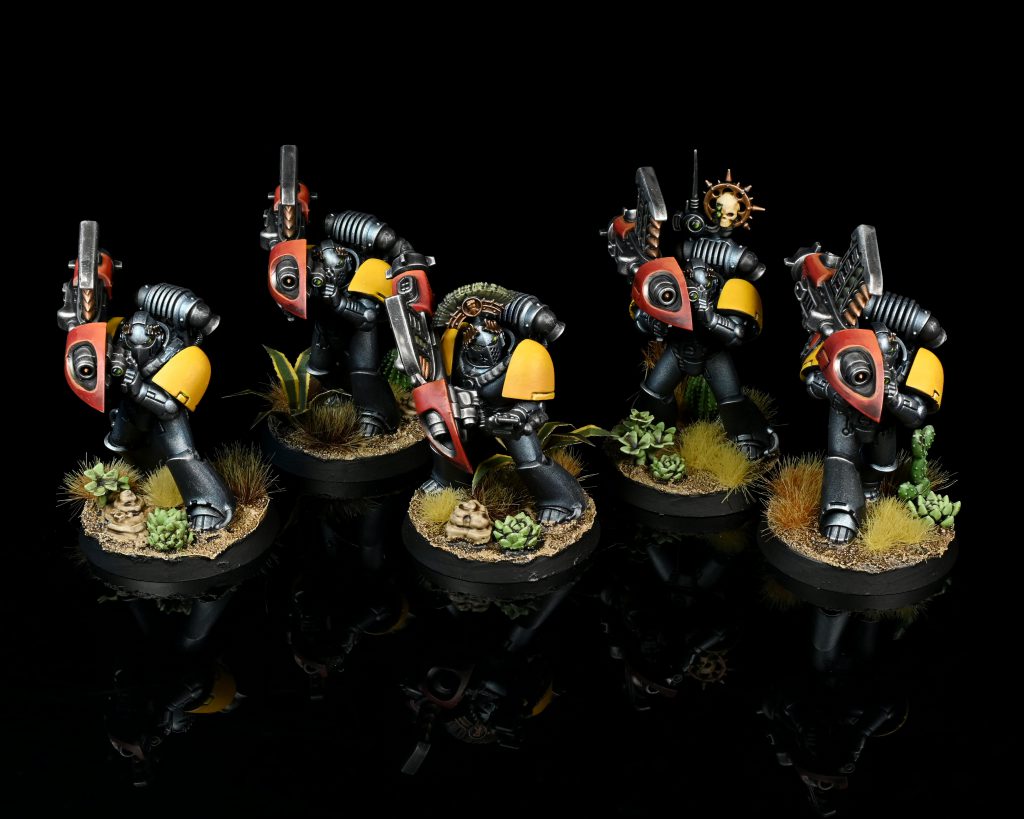 Heavy Support Squad w/ Missile Launchers. Credit: Rockfish
Less ambiguous is what happens if the active player's unit is Pinned - they fire Snap Shots. This absolutely sucks for them.
Now the active player's unit continues with the sequence, firing additional weapons (models removed as casualties definitely can't fire these) and so on.
So what does this all mean? Well it means that Return Fire just got a lot nastier and some units are going to be much more vulnerable to its effects. Models able to fire more than one weapon in particular are in for a shock, because if they're killed in that return fire even if the ambiguity is decided in their favour they only get to shoot that first weapon. Pinning is also even more of a threat now, and it was already brutal.