 This website uses cookies.
  The Goonhammer Round Table: Why it's Important to Support Your Local Game Store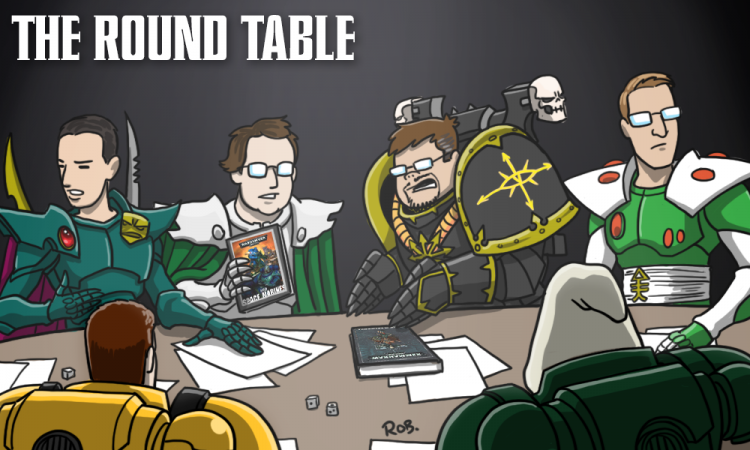
Today's Round Table
- Jon "JONK" "Jonkasual" Kilcullen
- Thundercloud
- Edwin "Lupe" Moriarty
- Kenji
- Neon
- Ilor
- Raf "CaptainRaffi" Cordero
- Robert "TheChirurgeon" Jones
How does your story here begin - what sparked your love for local game stores?
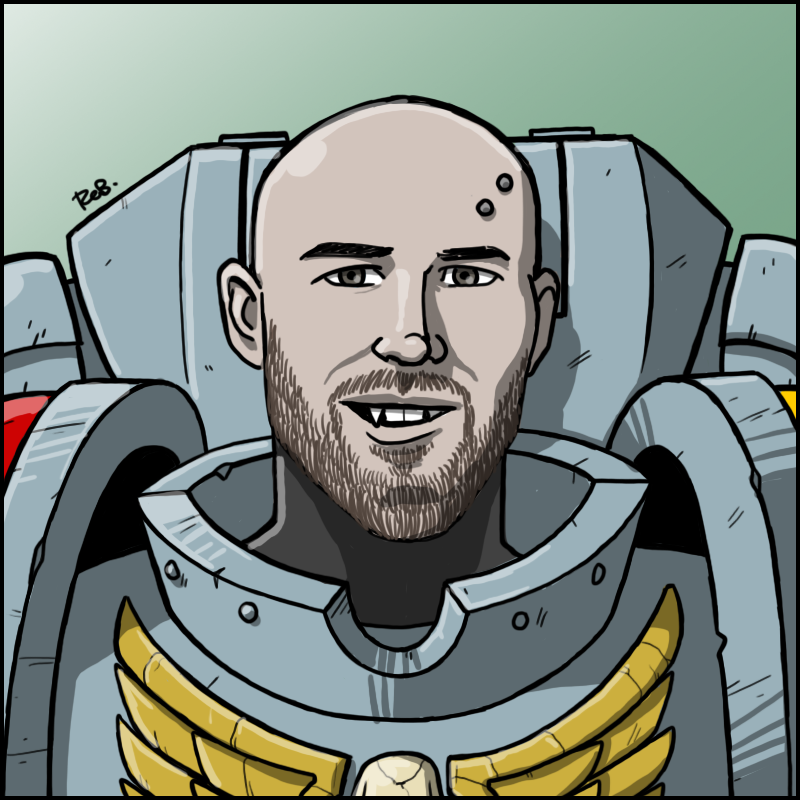 Jonkasual: The first memories I have of seeing GW products was back in the early 90s when my dad would take me to his favorite shop to check out the hot new laser disc releases. During my visits I noticed they had a single table at the back of the store set up for wargaming; that and some fantasy dwarves would always catch my eye. Every week I would beg my dad to buy some for me and eventually he did, setting terrible events into motion. This is where it all began for me. I eventually had to put my hobby on hold for many years while other aspects of life took priority but it never really left my consciousness. It is a very pleasant memory I will always have of father/son time that I hope I can one day soon replicate with my child.
 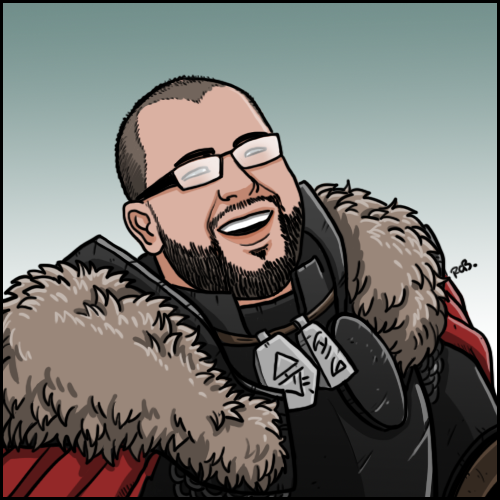 Thundercloud: I would say some of my fondest childhood memories are having my friends come round to my house, getting out my six by four table and variety of scenery either from the 2nd ed 40k box, 4th ed fantasy box, card scenery from White Dwarf or all three (to which was later added the Gorkamorka scenery) and playing dumb games of 40k with everything we had, which for my marines was Space Crusade devastator squads and tarantulas, 2nd ed marines, and a smattering of metal characters and Terminators.
 Where did I go to play big games? The GW in the city centre. As it was only 4 and a bit miles, it was an ok walk. This was the 90s where as long as one child survived to adulthood no one judged you, so my mother wasn’t fussed at me disappearing for the day, and I had seen the UK government safety video about stranger danger by the official UK government representative for child safety, Jimmy Savile.
It had a big table, and did ‘Saturday Games’ which were a big thing in official GW stores in the early 90s, where you had giant in store battles featuring the big release of the month, and could bring your own stuff or use store miniatures. I dread to think how much painting staff had to do in those days.
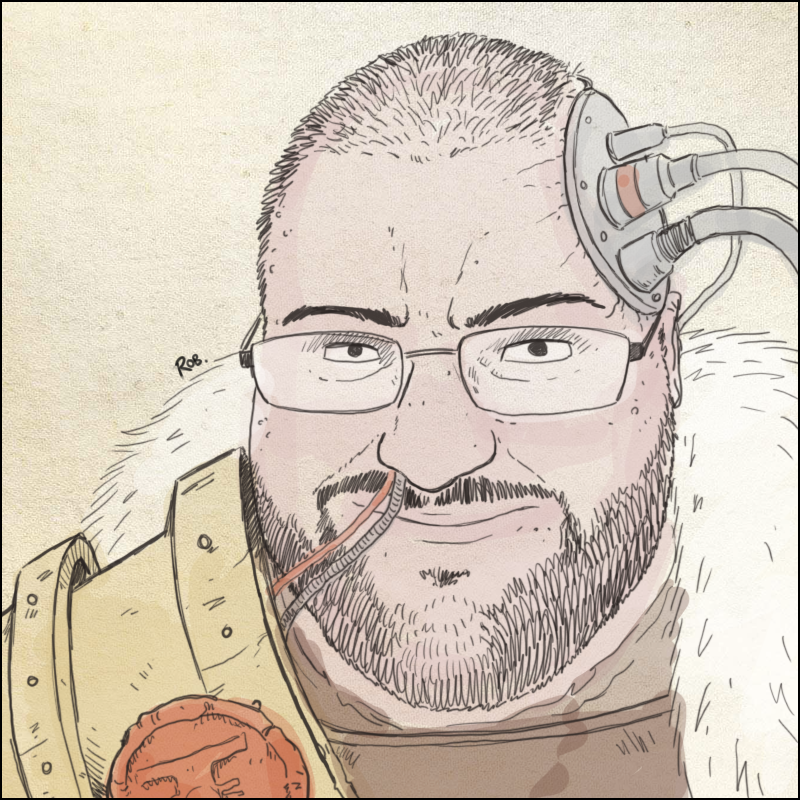 Lupe: Growing up near Bromley there was a Games Workshop nearby that I would become a frequent visitor too. But before I even made it there, there was a toy shop in the high street where I lived that had a small stock of GW kits at the back. I’d go and stare at them, eventually I decided, having looking through one of the paper catalogs they had, I would get a Hive Tyrant, because it was the coolest thing ever. The toyshop directed me to the GW store because they didn’t carry the metal minis, and a mistake that had endured almost 30 years was begun.
 Kenji: As odd as it sounds, I actually never really encountered Warhammer or miniatures games until much later in my time going to LGS; the first time I did was a small store in Pennsylvania, where I was going for my PhD. The store was basically the nerd oasis in what was otherwise a totally devoid of almost anything else to do desert, and I was playing Magic at the time. That store originally started by selling baseball cards, and some students convinced the older owner to expand to things like Magic, Warhammer, and D&D. I probably wouldn’t even be interested in the hobby without that place, and I think it perfectly encapsulates the idea of a FLGS: a place for people to be, rather than just a store.
  Neon: North East England is strangely flush for choice in Games Workshop stores, and while one of them was shut down at the time I was getting into Hams, I had three different GWs just to choose from, never mind the various other nerd and hobby stores around those. After being enlightened into the hobby via trampling on a cousin’s Sauron figure in the middle of the night, I’d regularly pester my Da’ to take me in particular to the Newcastle store, spending every last shred of pocket money on figures that my clumsy child fingers would mangle, or to the various other geeky shops that hung around the same glorious stretch of road towards Central Station.
As I got older and started to actually take interest in, y’know, actually playing the game. I mostly started bouncing between Sunderland and South Shields, hustling for pick up games and mostly making a nuisance of myself. Sunderland more won out over time though, especially as a indie FLGS sprung up that’d become my regular haunt, the now sadly defunct Colosseum Rex.
Neon: North East England is strangely flush for choice in Games Workshop stores, and while one of them was shut down at the time I was getting into Hams, I had three different GWs just to choose from, never mind the various other nerd and hobby stores around those. After being enlightened into the hobby via trampling on a cousin’s Sauron figure in the middle of the night, I’d regularly pester my Da’ to take me in particular to the Newcastle store, spending every last shred of pocket money on figures that my clumsy child fingers would mangle, or to the various other geeky shops that hung around the same glorious stretch of road towards Central Station.
As I got older and started to actually take interest in, y’know, actually playing the game. I mostly started bouncing between Sunderland and South Shields, hustling for pick up games and mostly making a nuisance of myself. Sunderland more won out over time though, especially as a indie FLGS sprung up that’d become my regular haunt, the now sadly defunct Colosseum Rex. Ilor: My first introduction both to Hobby stores in general and games like 40K in particular was at a Rider’s Hobby Shop. I had done a little bit of model train stuff as a kid, and coerced my parents to stop into the shop to see what they had. I ended up not buying any train stuff, but did come away with a Dragon magazine, starting a life-long love of RPGs. I went back to that store again and again over the years, spending endless time looking at blister packs of metal Warhammer miniatures. When the original Rogue Trader rule set came out, one of the store employees started putting on demo games, and that started me on a tabletop miniature wargaming career that is coming up on four decades.
When I moved to college, I was pleasantly surprised to find a Rider’s location there as well. Over the years, many of these locations closed down, either because the rents got too high or because the owners retired. Other game stores have come and gone, but these physical locations are incredibly important for the hobby. Seeing something in a window is often enough to spark your interest and imagination in a way to which seeing a photo online doesn’t really compare. And were it not for the helpful and endlessly patient staff, I may not have had the opportunity to develop so many of the hobbies I love so much.
 Rob: Two game stores were pivotal in my hobby life. The first was Days of Knights, near the University of Delaware campus in Newark, Delaware. Shortly after I discovered Magic: The Gathering through a friend, I found DoK, a store filled with literally everything young Robert wanted in his life. They stocked Magic, tabletop RPGs, board games, puzzles, miniatures games - you name it. I used to beg my dad to take me over there every first Saturday of the month to play in Magic tournaments where I'd inevitably get stomped, but I had a blast doing it. Later, when I was in high school and had moved back from Italy, I'd spend more time there playing 40k. I helped set up and build terrain for the store's club/game room, helped run tournaments and campaigns, and hung out there every Thursday night until well past midnight just playing games and shooting the shit with people. My mom was not thrilled about her 17 year-old coming home at 1 in the morning on a school night but I wasn't exactly getting into trouble so she put up with it.
The other store was Quinta Dimensione, a local comics and, at the time, game store in Ferrara, Italy, where I discovered Warhammer 40k. My family moved there when I was in the seventh grade and I spent all summer hanging out at that store, playing Magic and talking to the locals. I was fluent in Italian by the end of my first summer, largely because I spent several hours a day talking to Italians and picking up the language playing cards. Later that would shift more to Warhammer, where I'd lose dozens of games of 2nd edition to an Eldar player named Giovanni. When I returned to the states, I brought my interest in 40k back with me, and took up playing that again at DoK. Playing at the local shop was a massive part of how I made friends in Italy and learned the language and the store gave us the tables, space, and terrain to do all of that.
What do your local FLGs mean to you?
Jonkasual: For myself as a die-hard competitive player and captain of a large 40k team, the stores are my life blood. They are places where we organize meet-ups and throw down test events. They allow me to meet new players and help guide them towards showing up to events. These are the places that run our RTT’s, supporting our events either by offering up their space or by tossing some funding to prize support. I make it my mission to step into every shop in the city at least once every month to get face time with the owners, to ask them how they are doing, to see how their shops are doing and to make any purchases I possibly can. These are the sites of the evening post work hangouts with teammates or with local gamers where we can shoot the shit and forget about our days for a couple hours while throwing down some hams, covid has really put a spotlight on just how lucky we are to have spaces like this and how great it was in the before times. I know not everyone is so lucky and some places are plagued by tribalism (looking at you Boston) but it is absolutely critical coming out of covid to support each other and communicate. This goes for shop owners, players and most importantly TOs. So I'd say "Thank you" to IWantThatStuff, Maxx collectibles, Gameknight games, and our local GW - without your shops my community would be non-existent and I would not have a platform like this to tell other players why they should re-consider buying non-local and actually walk into their FLGs
 Captainraffi: I flat out would not be in the gaming hobby without my local FLGS. My immediate circle of friends and family don’t have much interest in board gaming or miniature gaming but it was through my local shop that I found a community of gamers who would end up becoming that new circle of friends. It began with Netrunner; the shop had a league and I joined to get my weekly fix. It grew into open board gaming nights, and from there into late night basement game nights. These days I don’t play in the shop as much, but I still try to shop there. I like knowing that as life changes and people move away/can’t game, there’s always a community nearby I can tap into.
It’s worth noting, that the shop I’m talking about is the ideal FLGS for a board gamer. They are focused on board gaming inventory, have private rooms with large tables, and a library of demo games you can play. Magic events and product exist but it doesn’t dominate the space or community. They also host Warhammer events, hobby clinics, etc. but again everything lives together without one dominating any other. It’s clean, spacious, and has friendly staff. I have always said that the cardboard and plastic costs the same whether I shop online or in store; when I shop in-store I’m paying for all the other things the store provides.Lupe: For me the definition of “FLGS” is a strange one, as my closest hobby store is… Warhammer World. But independent stores have always been part of the lifeblood of the hobby, even here in Nottingham. The loss of Chimera, a local FLGS of long standing, last year was a huge blow for the community, and that really cemented my understanding of how important they are. Luckily we’re nerd central, so we have more than one, and the Dice Cup is a hybrid games store and board game café, and a lovely space. Many pleasant evenings have been spent there, and I look forward to being dragged there by enthusiastic family members for friday night magic when things open up again.
Captainraffi: I flat out would not be in the gaming hobby without my local FLGS. My immediate circle of friends and family don’t have much interest in board gaming or miniature gaming but it was through my local shop that I found a community of gamers who would end up becoming that new circle of friends. It began with Netrunner; the shop had a league and I joined to get my weekly fix. It grew into open board gaming nights, and from there into late night basement game nights. These days I don’t play in the shop as much, but I still try to shop there. I like knowing that as life changes and people move away/can’t game, there’s always a community nearby I can tap into.
It’s worth noting, that the shop I’m talking about is the ideal FLGS for a board gamer. They are focused on board gaming inventory, have private rooms with large tables, and a library of demo games you can play. Magic events and product exist but it doesn’t dominate the space or community. They also host Warhammer events, hobby clinics, etc. but again everything lives together without one dominating any other. It’s clean, spacious, and has friendly staff. I have always said that the cardboard and plastic costs the same whether I shop online or in store; when I shop in-store I’m paying for all the other things the store provides.Lupe: For me the definition of “FLGS” is a strange one, as my closest hobby store is… Warhammer World. But independent stores have always been part of the lifeblood of the hobby, even here in Nottingham. The loss of Chimera, a local FLGS of long standing, last year was a huge blow for the community, and that really cemented my understanding of how important they are. Luckily we’re nerd central, so we have more than one, and the Dice Cup is a hybrid games store and board game café, and a lovely space. Many pleasant evenings have been spent there, and I look forward to being dragged there by enthusiastic family members for friday night magic when things open up again.But for me, the FLGS is of massive important far beyond my personal enjoyment. I’m a freelance games designer and writer, and that means that I don’t have the resources behind me (always, at least) of a studio and a space for dedicated playtesting. It’s great when I work with a company that can provide that, but the Dice Cup has offered a wonderful space, a private backroom, for playtests and demos and other key parts of my job. Without that dedicated gaming space my job would be much much harder… as anyone who’s heard me complain about how hard it is during lockdown can attest. The FLGS isn’t just about a single business, it’s about the network of companies and creatives that use it as their point of contact, and someone workspace, that produce the games everyone loves.
Thundercloud: I run my local LGS with my wife, the more business minded of the two of us. It’s a small store but we enjoy it. Covid has been hard for us, and the virus has claimed the business we were going to cooperate with to run events (the large events business opposite with table space suitable for tournaments is no longer with us). With the current restrictions and best practice to keep people safe it means it’ll likely be months before events happen at the store. If Covid in the UK follows the standard Coronavirus curve (winter peaks, summer dips) going forward we may see a pattern of Summer events and more quiet and socially distanced winters.
Over the various lockdowns we’ve been delivering people’s stuff to their doors, and we’re now reopened as we’ve both had vaccinations and business is slow due to people still working from home (and hence fewer people travelling to the city centre). It’s been good to see our customers and help keep them engaged in the hobby in what has been, for most people, a pretty difficult time.
Kenji: I live in a somewhat interesting crux of a place that should have more LGS, but actually has very few. Technically, CSI is a “Local Game Store” to me, and the other “FLGS” is a giant chain of comic book stores that have swallowed almost all local businesses. So, when I do find an actual “Local” game store, I always try to support them in any way that I can. Ironically, this is never easy: it’s a mixture of available, affordable, or distant, in a “pick 2” sort of capacity. Before COVID, though, a single LGS was “my” LGS, in that it was the place that helped me finally get into the hobby more and play games. There was a vibrant Guild Ball community there, a huge Infinity crowd, as well as AoS and even MESBG. Sadly, COVID claimed the business, and I’ve spent the year realizing I no longer have a store to go to or play at, or any way to easily meet new players. While my partner loves board games, they aren’t as keen on miniatures, and my housing situation prohibits me from hosting or having my own table, meaning I’m reliant on stores for places to play and explore the hobby. LGS are vital for this, and the few that remain here in the wake of chain stores are becoming fewer and far between post-pandemic; so while I might indeed pay a few dollars more for a board game than I can on Amazon or CSI, the investment is, in some small way, in hopes of one day getting to actually enjoy my miniature hobbying again.
Neon: Community. Above absolutely everything else, Community. The best stores I’ve ever been in aren’t the ones with the greatest range of stock, or the best locations, they’ve been the ones with the most vibrant and passionate communities. A big reason I started drifting away from the bigger “better” stores in Newcastle and Gateshead was because I couldn’t feel at home in them, their were too many people, too many cliques and sub-communities. Shields and Sunderland won out because they were small and they were welcoming without being indiscriminate about the kind of nerds they let in, and then Rex started winning out above them because the guys who ran it were very careful about the kind of environment they encouraged, especially at gaming nights and FNM.
I think one under-looked at aspect of the importance of indie LFGS’s is their impact on smaller games and building player-bases. We managed to get a budding Guild Ball scene rolling shortly before the game's 2nd edition launched and were starting to attract a growing crowd. Unfortunately as the first signs of the game's 3rd edition started to rear its head, Rex shut down and the scene essentially imploded instantly, our scattered attempts to keep it on life-support failing because that support structure was gone utterly.Ilor: Totally agree with Neon, for me the FLGS is all about community. Years back I was working a job that had me 50% time at home and 50% time at a customer site a thousand miles away. I was working two or three weeks at a time on-site, and man were the first couple of rotations incredibly boring. Then I discovered a local game store whose owner was gracious enough to let me take up some table space to paint. I spent evenings there after work, just painting and chatting with the staff and other patrons. Suddenly I was meeting loads of people with similar interests, and it wasn’t long before I had a whole new circle of friends in my adopted home. I got to the point where I was looking forward to my on-site rotations just as much as I was to my return trips, because I had people to socialize and play games with.Without an FLGS, that would not have been possible. Gaming is so often a hobby that takes place in peoples’ basements and garages, and without a centrally-located establishment for people to meet and mingle, you’ll definitely miss out on what might very well turn out to be life-long friends.
Why is it so important to support your local stores and how can you do this?
Jonkasual: Before Covid shops were a place that had space to play games and meet new players while occasionally being a place I could pick up a needed paint or model. While we are entering our 3rd lockdown here it makes me really wonder how our FLGs have managed to keep the doors open. I can not imagine the stress this last year has put on our shops around the world, thousands of people if not millions of people have lost their jobs and businesses in this time. Some of our FLGs have suffered this fate as well and as many of us come out of the Covid nightmare and slowly get back to our new normal the loss of these shops is going to be felt immensely. A Lot of these stores are run by people that did not get into the business to be rich, let's be honest, B&M shops are not hugely profitable. What they provide is an experience that we hit on in our nostalgia section, all of us have some kind of experience like this and without your FLGs you risk losing these experiences for the next generation of gamers which will eventually just kill your communities. Finding places to run events will be very hard coming out of covid with rising rental prices and with shops disappearing this could lead to a real hard time for TO’s, especially if you also can not find prize support via these shops anymore.
From a competitive players perspective a local shop represents a hub that I can tap to increase my player base and advertise my events. Competitive play is such a small part of the community and these shops usually have dozens of basement hammer groups that show up, buy a couple models and then are not seen for a couple weeks. Getting into the shops and meeting these people and having chats to get games with them in hopes of linking up our groups is a really important part of the local communities growth. Removing even a single shop in the city represents hundreds of players that just disappear from the community's consciousness.
There are many ways to support your local shops beyond just buying tons of models (this will help though). For myself I do my best to make contact with every shop when I can and just ask them how things are going. Sometimes just reaching out to your shops and sending them a friendly email or posting on their social media that you are concerned about them and really can't wait for a time where you can be in the shops again will make their day and give them some much needed hope. For cities with many shops I would really encourage you all to go out of your way and either walk into a shop that isn't your normal stomping grounds or send them a PM saying that when things open up again you and your friends will make efforts to try out their shops, will really be encouraging for them. This is absolutely critical for those of you who are TO’s and those that run teams. You want facetime and contacts with every shop to open up lines of communication between player bases and shop owners so you can avoid competing scheduled events. All of this will help both you and the FLG’s. There is no downside here except some lost time investment, which we all have a lot more of right now thanks to covid.
We all have the temptations to quickly purchase items off amazon, eBay or some other online shop but I really do encourage you to by-pass the giant companies and think about your FLG’s and how meaningful it is for you to purchase some items with them. I get that right now money is tight but please consider finding some ways to either walk into the shops, make some purchases, and/or open up a line of contact and share your positive experiences you have had in their shops. It is critical for all of us that these stores survive, you WILL feel the impact of them going under.
Lupe: Let’s be clear, the pandemic (and Brexit, yay) has hit gaming stores in the UK absurdly hard. If they had a robust online storefront, they may have actually found their fortunes rise (I know several people who are involved in larger companies like this who have told me this last year has been their best ever), but for those who rely on in person visitors and foot traffic it’s been a disaster. The small business relief offered has been marginal at best, and not enough to keep heads above water. A huge number of beloved stores are right at the edge of collapse, and a horrifying number will never properly reopen again.Without these vital community hubs our hobbies can’t be the same, for a huge variety of reasons. They’re not just places to buy stuff, they’re places to find advice, other players, friends, spaces to work, creative inspiration and enthusiastic testers. For me, losing the gaming stores in the area would be an enormous blow, and I know it would be for thousands of other people in the area too.
Some stores are selling stuff online - buy from them if you can. Others are doing curbside pickup, or limited access. Please please make the most of it. It’s not about where is cheapest, it’s about keeping the beating heart of gaming alive until it’s ready to open up to us all again. Some stores are running credit campaigns (so you can buy vouchers, etc now for when they reopen) while others are just asking for money on funding platforms. It’s worth understanding what an act of desperation this is. The margins in gaming stores are never amazing, and it’s not a sector that pays well, but the people who do it, do it out of a deep love for the hobby. You’d be surprised how many stores are kept afloat by personal investment from the owner. If they’re asking for you help, it’s because there are literally no other choices - please consider it, if you can afford to.
Thundercloud: If people want spaces to game, to hold a product in their hands before they buy it, for there to be a local events scene, then you have to spend some money at your LGS. Ilor: Yup, it is this exactly. In a very real sense, you get out of your FLGS what you put into it. If you support them financially, they will be able to support you in your love of hobby - either by getting the things you want locally or by providing a venue for you to meet new people who share your interests.Kenji: I’m a bit old fashioned but frankly if I cannot physically obtain a product the day of release (or the day I am aware of it) I lose interest, and that’s especially true if I can’t actually put it in my hands physically. Looking at a box, or even holding the item, goes a long way to the sort of satisfying experience of shopping for me. Only LGS offer this; as I mentioned, CSI is a “Local” store, but recently obliterated all physical stock and only ship from their warehouse now--I haven’t shopped there in over a year. Unless a game is impossible to obtain otherwise, though, I will always prefer to go to a LGS, or even wait for them to order a copy, just to have the experience overall.I think the idea that spending money is the only way to support a LGS is wrong, though. Word of mouth is really important too, as are things like SEO results; google reviews of your favorite stores can be a huge turning point these days, and it’s probably easier now to find a new store to shop at or play at (assuming they are local to you) than it ever was, but I think a lot of people neglect to consider these as ways to support their local businesses!
Also, take it from someone who lives in a fairly bustling area yet has fairly few and very far between shops: if you do not support your LGS, you will not have places to play, and if your LGS provide games other than GW products, when those stores leave or are replaced by a chain store of some form, so too are those smaller games. It is weird to say it this way, but I’ve seen it happen in front of me; our local comic book store juggernaut has swallowed smaller, game centric stores with vast ranges of products and turned them into carbon copies of their flagship stores that only carry Magic, Pokémon, some GW, and very entry level board games. It’s important to do what you can, within reason, to protect the FLGS you have, because they are not guarantees.
Rob: I agree with Kenji 100 percent on this - at its best, the FLGS is a place for people to be and not just a store. Online retailers just cannot match that, and so it's important to support local retailers. You don't have to buy everything there, and I know that the economics can make things rough, but finding ways to spend money with local retailers benefits everyone - you help a local business stick around, put money directly back into your community, and you help curate a place for younger and newer entrants into the hobby to discover the games you love and build a community around those.This is something that seems trivial in the digital age and I've seen plenty of older gamers/hobbyists talk about how they prefer private hang-outs and I honestly get that; it's much more comfortable to kick back in your own space and drink a beer and play. But you can't meet new people doing that and for younger players and newer hobbyists, that might not be an option. So it's critically important to support your local store - not just by buying things there and spending money, but by helping ensure that it's a space that's welcoming and inclusive for everybody.
Also I've found that it's easier to get something on the day of release if I have a local store hold it for me than if I pre-order it, which is a huge plus in favor of buying new stuff at the LGS.
Buying hobby things at local stores may cost more. Is it worth it - in *this* economy - just to “stay local”?
Kenji: So this might be a “hot” take, but the old saying is that you get what you pay for, so, yes--within reason. Again, could you perhaps find that game you weren’t sure about on Amazon for 50% less? Maybe. But Amazon doesn’t provide you with tables to play at, with a neutral ground for your friends to all meet up without having to juggle house cleaning or other schedules to make space, and doesn’t support smaller publishers or products as readily. However, that doesn’t mean you should just throw money at the ground of any LGS you enter, either. Part of That Article that made little sense was the idea that you are obligated to spend money at LGS out of some sort of pity. If you don’t like the price, the vibe, or whatever else, don’t spend money! Before COVID would have likely shuttered them anyway, a local store closed, taking a very hostile tone with people on their Facebook. The store accused customers of “window shopping” only to buy on Amazon, etc., but overall the reality was just that the store had a huge library of old junk titles and a fairly weird relationship with the people who shopped there. The bummer is that they were the only store in the area to offer a trade-in program! But be smart: yes, a LGS might ask you to “pay more” than Amazon or a chain like CSI or Miniature Market, but that cost is going to more than just padding the LGS’s bottom line. Jonkasual: Oftentimes buying in a local shop actually does not mean you are shouldering an extra cost. Many shops offer various discounts (especially on GW products and especially for veterans) that allow them to come in equal to or under the giant online shops prices. It is not pity that you are giving these shops when you buy from them, you are investing in your community. These places are not just a shop, they are a community hub that links up hundreds of people and drives local events funneling new players into your various favored game systems. I myself would never have got into 40k if it were not for a local shop having these products on their shelves and randomly seeing them. Not everyone is in a situation where they can pay more for the same product so like Kenji stated, if you like the atmosphere, vibe and what the owners have created, then yes, it is worth it and please do so. Ilor: Unequivocally yes. Can I get products more cheaply over Amazon? Yes - although caveat emptor here, as counterfeit hobby supplies are an increasingly common thing over Amazon, a problem you won’t have going through a local shop using reputable distributors. But the “purpose” of a hobby shop is so much more than just a place to purchase stuff. If you’re a misanthropic antisocial grognard who wants nothing to do with people then by all means, order your hobby products online. But at its core the kinds of games offered by hobby stores tend to be inherently social. If you want a space that nurtures and supports the activities you love, it is incumbent upon you to patronize them with your business. And if that means paying a little more, then that’s an upcharge I’m happy to pay.Rob: Yes. You're keeping a local business around, supporting a place for the community to meet up and game, and still getting the goods you want. That's easily worth the additional money - you're literally investing in your community by doing this, something that does not happen when you buy through online retailers.Also, get to know the people who work at and run your FLGS. Talk about new releases, find out how things are going. Don't annoy them - remember it's their job to be there - but you'll be surprised at how a little conversation every now and then can go a long way toward getting the inside scoop on new releases, getting someone to hold a limited edition copy for you, and making sure the store is supporting the games you want to play. The FLGS is in a very real sense a community store in that regard - they'll respond to what local customers are playing and looking to buy, and they can be interactive, creating events and leagues that drive support.
Have any questions or feedback? Drop us a note in the comments below or email us at contact@goonhammer.com.